

Managing a busy restaurant or retail shop in the United Kingdom often means juggling countless tasks, from tracking stock to handling payroll. The pressure to minimise manual errors and deliver fast, accurate service is constant. Integrated POS systems offer a solution by connecting sales, inventory, and employee management in real time, reducing manual work and giving business owners greater insight. This overview explains what makes these systems different and highlights how they support operational efficiency for modern British hospitality and retail businesses.
Table of Contents
- What Is An Integrated POS System?
- Key Types Of Integrated POS Solutions
- How Integrated POS Systems Function
- Benefits For Retail And Hospitality Businesses
- Risks, Costs, And Common Pitfalls
Key Takeaways
| Point | Details |
|---|---|
| Integrated POS Systems Enhance Efficiency | These systems streamline operations by automating transactions and inventory management, reducing manual errors and improving service delivery. |
| Scalability and Customisation are Key | Choose a POS system that offers scalability and custom integration options to adapt to your growing business needs. |
| Robust Reporting Features Drive Decisions | Integrated POS systems provide comprehensive analytics and real-time insights, facilitating informed decision-making. |
| Risk Management is Essential | Address potential risks related to costs, security, and system integration through careful planning and staff training. |
What Is an Integrated POS System?
An integrated POS system represents a comprehensive technological solution that seamlessly combines hardware and software components to manage business transactions, inventory, and customer interactions in real-time. Unlike traditional standalone cash registers, these advanced systems create a unified ecosystem that connects multiple business functions through intelligent technology.
The core characteristics of an integrated POS system include:
- Centralised transaction processing
- Real-time inventory tracking
- Comprehensive sales reporting
- Customer relationship management capabilities
- Synchronised data across multiple business channels
At its essence, an integrated POS system goes beyond simple payment processing. Role of POS Software in UK Business demonstrates how these systems transform operational efficiency by providing businesses with holistic management tools. The system acts as a digital nerve centre, connecting various aspects of business operations from sales and inventory to customer engagement and financial reporting.

Modern integrated POS solutions offer remarkable flexibility for UK businesses across different sectors. Restaurants can track ingredient stocks while processing orders, retail shops can manage online and in-store inventories simultaneously, and service providers can streamline booking and payment processes. These systems eliminate manual data entry, reduce human error, and provide real-time insights that enable faster, more informed business decisions.
Pro tip: When selecting an integrated POS system, prioritise solutions that offer scalability and seamless third-party integrations to future-proof your business technology infrastructure.
Key Types of Integrated POS Solutions
Integrated POS systems have evolved to serve diverse business needs, with several distinct types catering to specific industry requirements. 7 Types of POS Systems for Retail highlights the critical variations that enable businesses to choose solutions precisely aligned with their operational demands.
The primary categories of integrated POS solutions include:
- Retail POS Systems
- Ideal for clothing stores, supermarkets, and general merchandise outlets
- Features inventory management and multi-channel sales tracking
- Hospitality POS Systems
- Designed for restaurants, cafes, and food service businesses
- Supports table management, menu customisation, and kitchen order routing
- Salon and Spa Management Systems
- Specialised for appointment scheduling and customer service tracking
- Integrates booking, payment, and client management functions
- Mobile POS Solutions
- Enables transactions through smartphones and tablets
- Perfect for pop-up shops, market vendors, and event-based businesses
- Cloud-Based POS Systems
- Provides real-time data synchronisation across multiple locations
- Offers remote management and scalable infrastructure
Each POS system type brings unique capabilities that transform how businesses manage their daily operations. Retail systems excel in tracking complex inventory across multiple product lines, while hospitality solutions provide specialised tools for managing complex service environments.
Modern integrated POS solutions are no longer one-size-fits-all technologies. They represent sophisticated ecosystems that can be customised to match specific business models, offering unprecedented flexibility and operational intelligence across different sectors.
Compare the main types of integrated POS systems and their industry fit:
| POS System Type | Best For | Standout Capability |
|---|---|---|
| Retail POS | Shops and supermarkets | Advanced inventory controls |
| Hospitality POS | Restaurants and cafes | Table and menu management |
| Salon/Spa POS | Salons and spas | Integrated appointment scheduling |
| Mobile POS | Pop-ups and events | Transaction processing via mobile |
| Cloud-Based POS | Multi-location businesses | Real-time synchronisation globally |
Pro tip: Evaluate your specific business requirements carefully and choose a POS system that offers the most comprehensive feature set for your particular industry and operational complexity.
How Integrated POS Systems Function
Integrated POS systems operate through sophisticated technological mechanisms that seamlessly connect various business functions. Point of Sale Integration Explained reveals the complex data exchange processes that power these advanced technological solutions.
The core functional components of integrated POS systems include:
- Data Synchronisation
- Real-time information transfer across multiple platforms
- Automatic updates of inventory, sales, and customer data
- API Connectivity
- Custom connectors enabling software platform interactions
- Seamless communication between different business applications
- Transaction Processing
- Immediate sales recording and financial tracking
- Secure payment gateway integrations
- Reporting and Analytics
- Automated generation of comprehensive business insights
- Performance metrics and trend analysis
- Multi-Channel Management
- Synchronising online and offline sales channels
- Consistent customer experience across platforms
These systems fundamentally transform how businesses manage operational data. By automating complex administrative tasks, integrated POS solutions eliminate manual data entry, reduce human error, and provide instantaneous insights into business performance. The technological architecture allows for real-time information sharing between different business departments, creating a unified and intelligent operational ecosystem.
Unlike traditional standalone systems, modern integrated POS solutions offer unprecedented flexibility. They can connect with accounting software, inventory management platforms, customer relationship management systems, and even HR tools, creating a comprehensive business management environment that adapts to specific organisational needs.
Here’s a summary of how key integrated POS features translate to improved business outcomes:
| Core Feature | How It Works | Business Impact |
|---|---|---|
| Real-time Inventory Tracking | Continuous stock visibility | Prevents shortages and overstock |
| Multi-Channel Management | Manages sales everywhere | Consistent customer experience |
| Comprehensive Reporting | Automatic analytics | Faster decision-making |
| API Software Connectivity | Links to other platforms | Increases operational flexibility |
| Customer Data Management | Collects purchase history | Enables tailored marketing |
Pro tip: Prioritise POS systems with robust API capabilities and wide-ranging software integration options to ensure maximum operational adaptability.
Benefits for Retail and Hospitality Businesses
Integrated POS systems have revolutionised operational efficiency for retail and hospitality sectors, delivering transformative advantages that extend far beyond traditional transaction processing. Modern POS Systems in Hospitality demonstrates the profound impact these technological solutions have on business performance.
Key benefits for businesses include:
- Operational Efficiency
- Reduced manual administrative tasks
- Streamlined order and inventory management
- Faster service delivery
- Financial Control
- Real-time financial reporting
- Accurate sales tracking
- Instant performance insights
- Customer Experience
- Personalised service capabilities
- Faster transaction processing
- Enhanced engagement tracking
- Inventory Management
- Automatic stock level monitoring
- Predictive reordering capabilities
- Precise product movement tracking
- Data-Driven Decision Making
- Comprehensive performance analytics
- Trend identification
- Strategic planning support
In the competitive retail and hospitality landscape, these integrated systems provide a critical competitive edge. They transform raw transactional data into strategic insights, enabling businesses to respond quickly to market dynamics, customer preferences, and operational challenges.
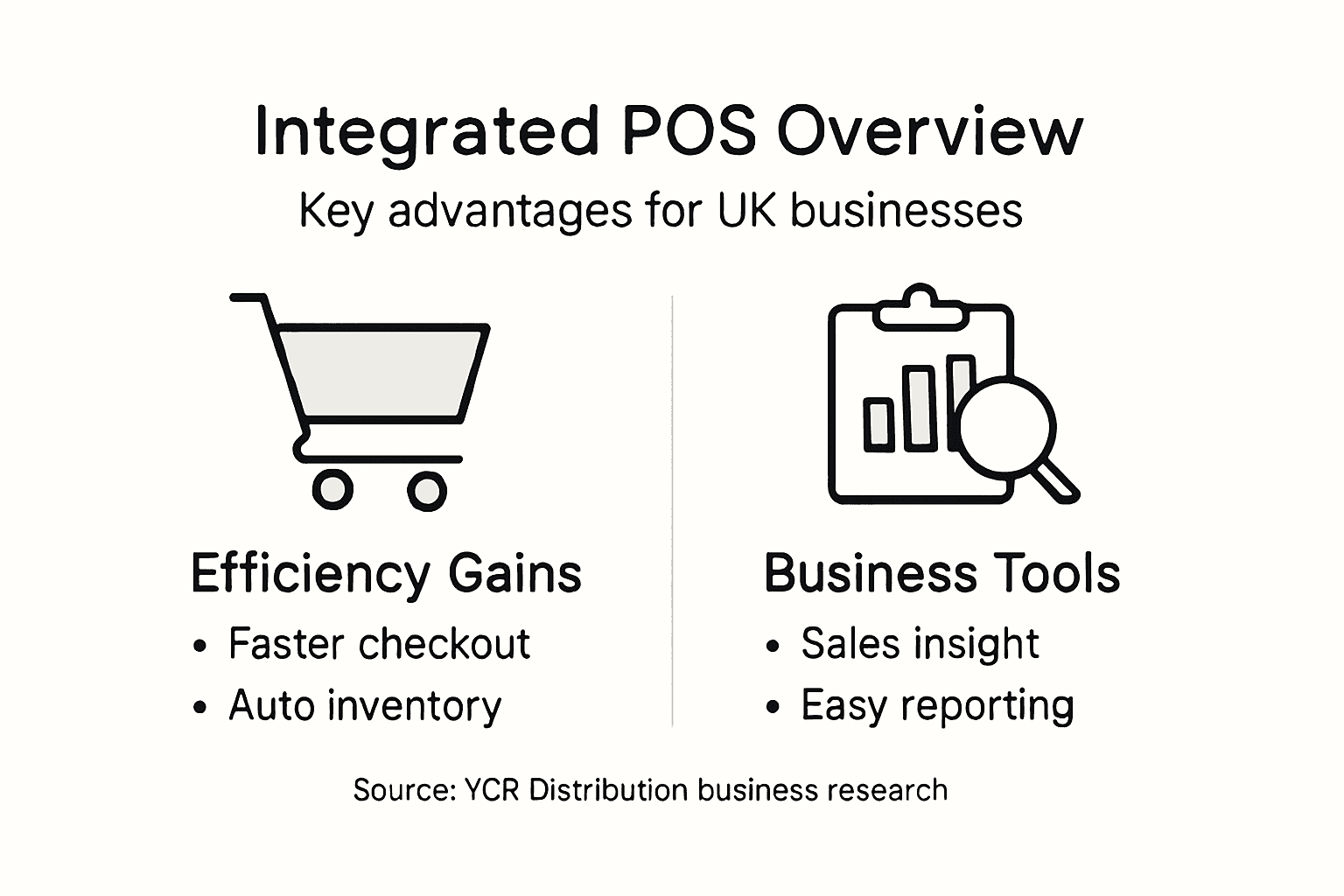
The technological sophistication of modern POS solutions goes beyond simple transaction recording. They create an intelligent ecosystem that connects sales, inventory, customer relationships, and financial management into a seamless, responsive business management platform.
Pro tip: Select a POS system that offers comprehensive reporting features and scalable integration options to future-proof your business technology infrastructure.
Risks, Costs, and Common Pitfalls
While integrated POS systems offer remarkable benefits, businesses must navigate potential challenges with strategic planning and informed decision-making. POS System Implementation Challenges highlights the critical considerations businesses must address when adopting these technologies.
Key risks and potential pitfalls include:
- Financial Considerations
- High initial setup and implementation costs
- Ongoing maintenance expenses
- Potential hardware and software upgrade requirements
- Security Vulnerabilities
- Risk of data breaches
- Potential cybersecurity threats
- Compliance with data protection regulations
- Technical Challenges
- Complex software integration processes
- Dependency on stable internet connectivity
- Potential system compatibility issues
- Operational Disruptions
- Learning curve for staff training
- Potential temporary productivity reduction
- Risk of system downtime during implementation
- Scalability Limitations
- Potential restrictions in system flexibility
- Challenges in adapting to business growth
- Limited customisation options
Businesses must approach POS system implementation with a comprehensive strategy that anticipates and mitigates potential risks. This involves thorough vendor assessment, robust staff training programmes, and developing contingency plans for potential technological challenges.
Successful implementation requires more than technological investment. It demands a holistic approach that considers organisational culture, staff capabilities, and long-term business objectives. Careful planning, ongoing support, and a willingness to adapt are crucial to transforming potential challenges into opportunities for operational improvement.
Pro tip: Conduct a comprehensive risk assessment and allocate resources for staff training before implementing a new POS system to minimise potential operational disruptions.
Unlock the Full Potential of Your Business with Integrated POS Solutions from YCR Distribution
The article highlights how integrated POS systems transform UK businesses by streamlining operations, improving inventory management, and enhancing customer experiences. If you are facing challenges such as manual data entry, complex software integrations, or the need for real-time insights across retail or hospitality environments, YCR Distribution offers tailored solutions crafted to meet those exact needs. With over 30 years of expertise, YCR provides a comprehensive range of hardware and bespoke software like SAMTOUCH and EZEEPOS that empower you to manage sales, inventory, and customer data seamlessly.
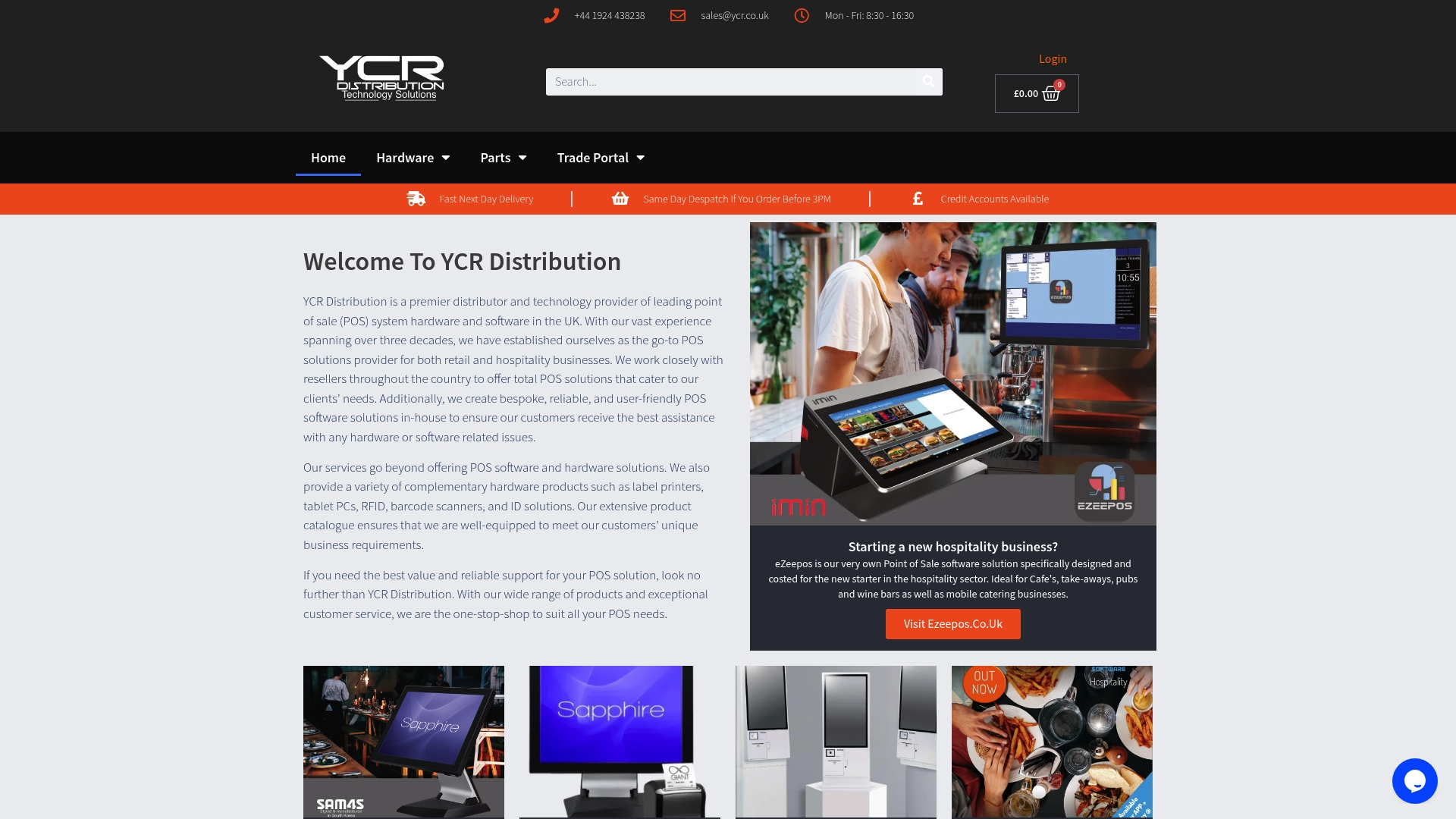
Take control of your business efficiency today by exploring our trusted collection of POS hardware and software at YCR Distribution. Discover how integrating advanced POS technology can drive faster decision-making and elevate the customer journey. Don’t let outdated systems hold you back — visit YCR Distribution now to find the right integrated POS solution designed specifically for UK retail and hospitality businesses.
Frequently Asked Questions
What is an integrated POS system?
An integrated POS system is a comprehensive technological solution that combines hardware and software to manage business transactions, inventory, and customer interactions in real-time.
How does an integrated POS system improve operational efficiency?
By automating administrative tasks, providing real-time inventory tracking, and offering comprehensive reporting, integrated POS systems streamline processes and reduce human error, enabling faster decision-making.
What are the different types of integrated POS solutions?
The main types include retail POS systems, hospitality POS systems, salon and spa management systems, mobile POS solutions, and cloud-based POS systems, each tailored to specific industry needs.
What are the key benefits of using an integrated POS system for businesses?
Key benefits include improved operational efficiency, real-time financial control, enhanced customer experience, effective inventory management, and data-driven decision making.