
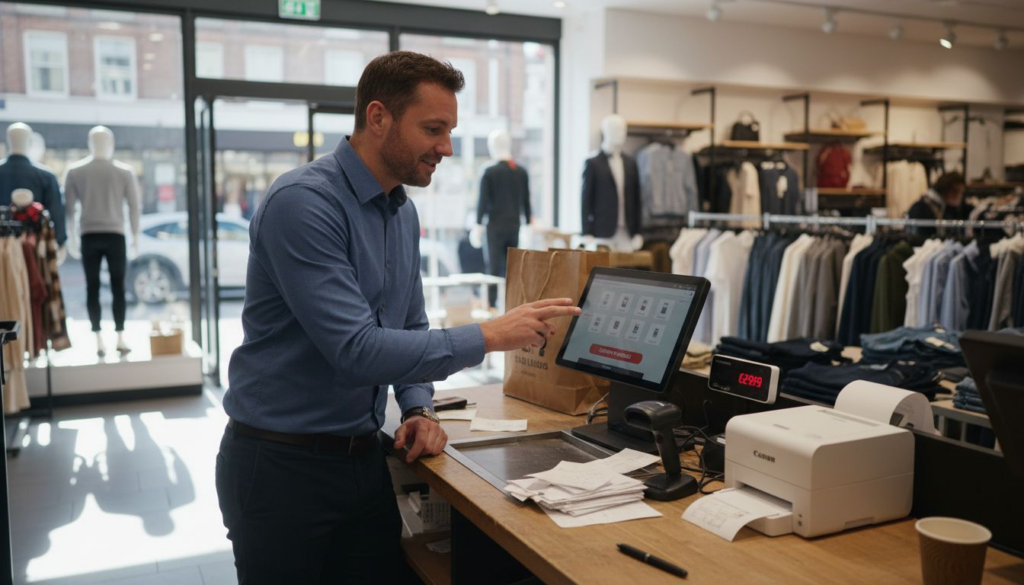
Choosing the right POS hardware can feel overwhelming when your business depends on speed and accuracy at every transaction. You want tools that ensure quick payments, precise product management, and a premium customer experience—but it’s not always clear which devices truly matter for your day-to-day operations. Getting it wrong means lost sales, frustrated staff, and unhappy customers.
The good news is you can cut through the confusion. With practical knowledge of the most reliable POS components, you can make choices that drive efficiency and help your business run smoothly. From modern touchscreen tablets to powerful barcode scanners, each item unlocks specific advantages for UK retailers, restaurants, and service providers like you.
As you read on, you’ll discover actionable insights into the must-have POS hardware your business needs. Expect solutions that save you time, reduce errors, and keep your customers coming back.
Table of Contents
- 2. Touchscreen Tablets: Modern Mobility For Sales
- 3. Barcode Scanners: Fast And Accurate Product Management
- 4. Receipt Printers: Reliable Proof Of Purchase
- 5. Cash Drawers: Secure And Organised Payments
- 6. Digital Signage: Enhancing Customer Engagement
- 7. Integrated Card Readers: Safe And Simple Payments
Quick Summary
| Key Insight | Explanation |
|---|---|
| 1. Utilise Touchscreen Tablets for Sales | Tablets empower staff to complete transactions anywhere, improving customer experience by reducing wait times and friction in the buying process. |
| 2. Implement Barcode Scanners to Streamline Inventory | Scanners reduce human error and speed up transactions, allowing accurate inventory management and faster service during busy trading hours. |
| 3. Choose the Right Receipt Printers for Efficiency | Modern thermal printers provide fast, reliable receipt printing, essential for maintaining workflow and customer satisfaction during peak periods. |
| 4. Secure Cash Drawers Enhance Accountability | Proper cash management with organised drawers ensures security, quick transactions, and straightforward reconciliation at day’s end, reducing loss. |
| 5. Integrate Card Readers for Seamless Payments | Integrated card readers streamline transactions and enhance security, reducing errors and improving the overall customer payment experience. |
…
2. Touchscreen Tablets: Modern Mobility for Sales
Touchscreen tablets have transformed how retail and hospitality businesses operate on the shop floor. Rather than being confined to a fixed counter, your team can now move freely throughout your venue, completing transactions anywhere a customer stands.
The real power of tablets lies in their flexibility. When your staff member takes a tablet to a customer waiting in a queue, browsing at a shelf, or seated at a restaurant table, you eliminate friction from the buying process. There is no need for customers to walk to a checkout or wait for someone to return with a payment device. This immediacy directly influences purchase decisions and customer satisfaction.
What makes tablets particularly effective for sales is their intuitive touchscreen interface combined with compatibility with professional POS software. Your team requires minimal training to operate them, which means faster adoption and fewer errors. The multimedia capabilities also allow staff to showcase products, display menu items with images, or run promotional content right in front of your customer.
However, not all tablets are created equal for retail and hospitality use. Screen size matters more than you might think. A screen that is too small becomes difficult to read in bright shop lighting, whilst a very large tablet becomes cumbersome to carry around all day. Most retail environments benefit from tablets in the 10 to 12 inch range, which strike a balance between visibility and portability. Processor speed ensures your POS software runs smoothly without lag, which is frustrating for both staff and customers. Battery life should support a full trading day without needing to return to a charging dock multiple times, as this disrupts service flow.
Consider a busy coffee shop scenario. Your barista takes a tablet to the queue with contactless payment capability built in. A customer orders, pays, and receives their receipt all within seconds, without moving from where they are standing. No bottlenecks, no abandoned carts, just seamless transactions. The same principle applies to retail environments. Your shop assistant can process returns, run loyalty programmes, or sell items from the stockroom without sending the customer to a fixed till.
Tablets also provide operational intelligence. You gain real time data on what is selling, inventory levels, and staff performance. This information flows directly into your business systems, giving you visibility across your entire operation.
Pro tip Choose tablets with robust cases and screen protectors designed for retail environments, as durability directly impacts your return on investment and reduces unexpected downtime.
3. Barcode Scanners: Fast and Accurate Product Management
Barcode scanners are the unsung heroes of retail operations. These optical devices decode barcodes in seconds, transforming manual product identification into a streamlined, accurate process that keeps your business moving.
Your staff no longer needs to type product codes, search through catalogues, or guess prices. A single scan captures all the information needed to ring up a sale, update inventory, and record the transaction. This speed matters enormously during peak trading hours. A busy Saturday afternoon in a retail shop or a lunchtime rush in a café becomes manageable when transactions process instantly rather than slowly.
The accuracy benefit runs equally deep. Manual entry introduces human error at every step. Your team might mistype a code, charge the wrong price, or fail to update stock levels. Barcode scanners eliminate these mistakes. When a product is scanned, the correct price, description, and inventory data pull directly from your system. This accuracy reduces customer complaints, prevents over selling, and gives you reliable inventory intelligence.
Different scanning technologies suit different environments. Laser scanners and imaging scanners each have their strengths. Laser scanners work brilliantly for fixed checkout positions where items move past the scanner in a predictable way. Imaging scanners excel in situations where barcodes might be damaged, at unusual angles, or where you need to read both traditional one dimensional codes and two dimensional QR codes. Many modern retail operations benefit from imaging technology because of this flexibility.
Portability matters for your business model. A fixed scanner mounted at a till works perfectly if all transactions happen at one point. However, if your staff members move around your shop floor, warehouse, or restaurant, handheld scanners give you the freedom to process transactions anywhere. Some venues even use wearable scanners that free up both hands, allowing staff to pack items whilst scanning simultaneously.
Consider a typical retail scenario. A customer approaches with five items. Your staff member scans each barcode in rapid succession. Prices appear on screen instantly, stock counts update in real time, and the transaction completes in seconds. No hunting through systems, no manual calculations, no delays. Your customer walks out happy, and your inventory data remains accurate.
The wireless capability of modern scanners adds another layer of convenience. Your staff can scan items from anywhere in your venue without being tethered to cables. This flexibility improves customer service because your team spends less time at fixed stations and more time actively helping customers.
Barcode scanners reduce checkout times and inventory errors simultaneously, delivering measurable improvements to both operational efficiency and customer satisfaction.
Pro tip Test your barcode scanners with damaged or poorly printed labels before deployment, as this reveals which technology handles real world conditions in your specific environment.
4. Receipt Printers: Reliable Proof of Purchase
A receipt printer might seem like a simple piece of equipment, but it plays a critical role in your business operations. Every transaction needs documentation, and your receipt printer is the device that transforms a digital sale into tangible proof of purchase.
Why does this matter? Consider what happens without a receipt. Your customer has no record of what they bought, how much they paid, or when the transaction occurred. Returns become complicated. Disputes arise. You lose the ability to verify sales for accounting purposes. A receipt printer solves all of this by creating an immediate, physical record that both you and your customer can reference.
There are two main technologies in receipt printing, and understanding the difference helps you choose the right device for your business. Thermal printers use heat sensitive paper and no ribbon, making them fast, quiet, and inexpensive to operate. They print receipts in seconds with minimal maintenance required. However, thermal paper receipts fade over time when exposed to light or heat. This matters less for daily transactions but becomes problematic if you need to reference a receipt from several months ago. Impact printers use ink ribbons and can produce multi-copy receipts, creating multiple copies in one pass. The printed information remains durable and legible for years. The trade off is that impact printers operate more slowly and require ribbon replacement.
For most modern retail and hospitality venues in the UK, thermal receipt printers dominate because they offer the speed and low operating costs that busy businesses demand. A transaction completes, and a receipt prints within seconds. Your customers can verify their purchase immediately, and your staff moves on to the next customer without delay.
Connectivity options matter more than you might initially think. Your receipt printer needs to communicate reliably with your POS system. USB connections work well for fixed checkout positions. Ethernet connectivity suits locations where your printer sits in a back office or centralised printing area. Wireless options like Bluetooth and Wi-Fi provide flexibility if you want to move your printer occasionally or use multiple printers across your venue. A café might use a wireless printer in the kitchen whilst maintaining a wired printer at the till. This flexibility adapts to your actual workflow rather than forcing your workflow to adapt to your equipment.
Speed is another practical consideration. During a Saturday afternoon rush or lunchtime service, slow receipt printing creates a bottleneck. Every second matters when customers are queuing. Modern receipt printers handle high volume without slowing down. A printer that takes 5 seconds per receipt becomes a genuine problem when you are printing 200 receipts per shift. Look for printers that deliver high speed printing without compromising reliability.
Reliability underpins everything. A printer that jams frequently or produces faded output creates frustration for both your staff and customers. Poor print quality makes receipts difficult to read, which damages customer trust. You need equipment that starts every morning and operates consistently throughout the day without requiring constant attention or troubleshooting.
Pro tip Keep spare thermal paper rolls and printer maintenance supplies stocked at your till, and test your printer weekly by printing a sample receipt to catch any quality issues before they affect customer facing transactions.
5. Cash Drawers: Secure and Organised Payments
A cash drawer might look simple, but it is one of the most important security and organisational tools in your retail or hospitality business. This single piece of equipment protects your cash, organises your denominations, and creates accountability throughout your trading day.
Think about what happens without a proper cash drawer. Your staff keeps cash loose in pockets or scattered across the counter. Money goes missing. You cannot reconcile transactions accurately. You have no idea who handled which payments. Security suffers. Customer service suffers because staff fumble around looking for correct change. A cash drawer eliminates all of this by creating a single, secure, organised point for all cash handling.
The security aspect deserves particular attention. A quality cash drawer connects directly to your POS terminal and locks automatically after each transaction. This means only authorised staff can access the cash at designated moments. If someone attempts to open the drawer without a transaction, the system logs it. This creates an audit trail that protects you from internal theft and makes accountability clear. You know exactly who accessed the drawer, when they accessed it, and what transaction prompted that access.
Organisation is equally important. Cash drawers feature compartments for different denominations. Your notes stay separate from your coins. Five pound notes sit in one slot, ten pound notes in another. This organisation allows your staff to make change quickly and accurately. Customers receive correct change without delay. Your staff waste less time sorting through mixed denominations during peak service times. This speed directly improves customer experience because transactions move faster.
Reconciliation becomes straightforward with a proper cash drawer system. At the end of your trading day, you count the physical cash in the drawer and compare it to what your POS system recorded. Any discrepancies appear immediately. You can trace where the difference occurred, investigate the cause, and prevent future issues. This reconciliation process protects your business financially and identifies training needs if a staff member consistently makes errors.
Secure cash handling procedures also involve defined roles and responsibilities. Your cashiers operate the drawer during transactions. Your supervisors conduct audits and reconciliations. This separation of duties reduces the opportunity for theft or careless mistakes. When multiple people share responsibility, accountability becomes shared and oversight improves.
Consider a typical retail scenario. A customer purchases items totalling seventeen pounds fifty pence. Your staff member presses total on the POS terminal. The cash drawer springs open automatically. Your staff member places the payment in the drawer, retrieves correct change from the appropriate compartment, and returns the drawer to its locked state. The entire process takes seconds. Your customer receives their change immediately, and the transaction is recorded and secured.
Different drawer sizes suit different business models. A small café might use a compact drawer that holds enough cash for a single shift. A busy retail shop might use a larger drawer or multiple drawers if several checkouts operate simultaneously. The capacity should match your transaction volume and the amount of cash you feel comfortable keeping accessible at any moment.
Proper cash management systems, including organised drawers and reconciliation procedures, reduce loss and ensure accountability across your entire payment process.
Pro tip Implement a policy where staff counts the drawer at the start and end of their shift, recording any discrepancies immediately so issues are caught and resolved before they compound over multiple days.
6. Digital Signage: Enhancing Customer Engagement
Digital signage transforms how you communicate with your customers. Rather than static posters that remain unchanged for months, dynamic displays show fresh content throughout your day, capturing attention and driving engagement in ways traditional signage cannot match.
Imagine walking into a retail shop and seeing a menu board that changes every few minutes. Promotional offers rotate automatically. New product launches appear on screens throughout the venue. Special deals highlight exactly what you want to promote at that moment. This dynamic approach grabs attention far more effectively than a laminated poster that blends into the background after customers have seen it once.
The power of digital signage lies in its flexibility and real time responsiveness. You control your content from a central system, making changes instantly across all your displays without printing new materials or asking staff to update boards manually. If you want to promote a lunch special at noon, you simply update the content remotely. If you need to communicate an important announcement, it appears on screens throughout your venue immediately. This speed and flexibility create opportunities that static signage simply cannot provide.
Centralised content management systems enable you to manage what appears on every display in your business from one control point. Your head office creates content that displays in every location. Your individual venues customise content to reflect local promotions or events. This balance between consistency and flexibility means your brand message stays unified whilst allowing local relevance.
For retail and hospitality businesses, digital signage serves multiple purposes simultaneously. Menu boards in restaurants display your offerings with appealing images that make customers hungry. Point of sale displays in shops highlight promotions at exactly the moment customers are making purchasing decisions. Window displays attract passers by with moving images and bright colours that static displays cannot match. Wayfinding signage helps customers navigate your venue, reducing confusion and improving their experience.
The customer engagement benefit runs deeper than simple promotion. Research shows that dynamic, real time visual communication increases message retention and participation significantly. Customers notice moving displays. They read content more carefully. They respond more positively to promotions presented on engaging screens. This translates directly to increased sales and customer satisfaction.
Consider the practical advantages. No more printing costs for promotional materials that become outdated. No more staff time spent updating physical boards. No more waste from discarded posters. Your environmental footprint shrinks whilst your marketing effectiveness increases. You can run A B testing by displaying different promotions on different screens, measuring which approach drives more sales, then optimising based on actual data.
Seasonal changes become effortless. Christmas promotions appear on schedule. Boxing Day sales transition automatically. New year resolutions driven campaigns launch without requiring physical intervention. Your signage adapts to your business calendar automatically, staying relevant and fresh throughout the year.
Digital signage also enhances customer safety and experience. You can display real time information like queue times, current wait periods for services, or busy periods to expect. Special announcements about events, safety information, or service changes appear instantly. This transparency improves customer trust and reduces frustration.
Digital signage replaces static communication with dynamic, engaging content that captures attention, drives message retention, and creates measurable improvements to customer engagement and sales.
Pro tip Start with one or two high impact displays in your most visible areas, measure customer response and sales lift, then expand your signage network based on proven results rather than deploying displays everywhere at once.
7. Integrated Card Readers: Safe and Simple Payments
Card payments dominate modern retail and hospitality. Integrated card readers built directly into your POS system transform how you accept these payments, eliminating separate devices and creating a seamless, secure transaction experience for both your staff and customers.
Why does integration matter? When your card reader connects directly to your POS terminal, the entire transaction flows through one secure system. Your customer inserts or taps their card. The reader communicates securely with the payment network. Authorisation happens instantly. The transaction records automatically in your system. Everything happens in one place with no manual entry, no separate devices, no fumbling with cables or adapters. This simplicity reduces errors and speeds up service.
The security aspect deserves your careful attention. Integrated card readers employ encrypted communication protocols that protect sensitive payment data. When your customer taps or inserts their card, the reader captures the data securely without exposing it to your staff or your wider systems. The card information never appears on your POS screen or receipt. This encryption means your business meets stringent payment security standards, protecting both your customers and your liability.
Secure card reader technology uses contact and contactless interfaces to accommodate different payment methods. Traditional magnetic stripe cards work through direct contact. Modern chip cards insert into a reader that verifies the chip cryptographically. Contactless payments including mobile wallets and contactless cards simply tap the reader without physical insertion. This flexibility means your system accepts virtually every payment method your customers might offer.
Contactless payments deserve particular mention because they have become standard in British retail. Your customers expect to tap their card or phone and complete the transaction instantly. An integrated contactless reader makes this experience frictionless. During busy periods, contactless payments move transactions through faster than traditional methods. Your queue times shrink. Your customer satisfaction improves. Your staff stress reduces.
The practical benefits extend beyond individual transactions. Integrated readers eliminate reconciliation headaches. Because payment data flows directly into your POS system, your records stay perfectly aligned. You cannot have a discrepancy between what your card reader reports and what your POS reports because they are the same device. End of day reconciliation becomes straightforward. You know exactly what card payments you received.
Consider a typical scenario in a busy café. A customer approaches the till with a debit card. Your staff member totals the transaction on the POS. The customer taps their card on the integrated reader. Payment authorises in two seconds. The receipt prints automatically. The transaction completes without any manual steps or separate handling. Your staff member moves on to the next customer. Everything happened efficiently through a single integrated system.
Modern integrated card readers also support multiple currencies and international cards. If your business serves tourist customers or international visitors, your integrated system accepts their payment methods seamlessly. This capability opens your business to additional customers and increases your revenue potential.
Wireless connectivity in integrated readers provides flexibility in placement. Whilst some readers connect via fixed cables, modern solutions use Bluetooth or Wi-Fi connectivity, allowing your reader to sit wherever suits your workflow. A restaurant might position the reader at table level for customer convenience. A retail shop might keep it at the till. Your setup adapts to your business model rather than the other way around.
Integrated card readers eliminate separate payment devices and manual processes, creating secure, fast transactions that improve customer experience whilst reducing operational complexity.
Pro tip Test your card reader with various payment methods regularly, including contactless cards, mobile wallets, and chip cards, to ensure every payment option functions smoothly before your customers experience any issues during busy trading periods.
Below is a comprehensive table summarising the key points about the operational benefits and considerations of implementing various digital tools in retail and hospitality sectors discussed throughout the article.
| Technology | Key Features | Benefits |
|---|---|---|
| Touchscreen Tablets | Mobile operations capability with intuitive interfaces. | Enhanced sales mobility, reduced queuing times, and improved customer experience. |
| Barcode Scanners | Accurate product identification through different scanning technologies. | Expedites inventory updates and ensures pricing accuracy with reduced manual errors. |
| Receipt Printers | Efficient receipt generation using thermal or impact printing technologies. | Provides transaction records crucial for accounting and customer service, improving reliability. |
| Cash Drawers | Secure storage connected automatically to POS systems. | Organised cash handling, reduced theft opportunities, and simplified reconciliation processes. |
| Digital Signage | Centralised, dynamic displays replacing static communication. | Improved customer engagement through real-time updates and enhanced visual messaging. |
| Integrated Card Readers | Integrated payment solutions accepting various payment methods. | Secure, fast transactions that simplify staff training and improve the overall payment process. |
Unlock Seamless Retail Success with Trusted POS Hardware Solutions
The journey to retail or hospitality excellence demands reliable POS hardware that eliminates operational hiccups and boosts customer satisfaction. This article highlights the crucial role of devices like touchscreen tablets, barcode scanners, receipt printers, cash drawers, digital signage, and integrated card readers. If you face challenges such as slow transactions, inventory inaccuracies, or payment security concerns these are the very pain points that tailored POS systems can solve effortlessly. Your goal is simple: create smooth, fast, and secure sales interactions that delight customers and empower your team.
At YCR Distribution, we understand these challenges. With over 30 years of experience providing UK businesses with robust, industry-leading POS hardware including trusted brands like SAM4S and iMin, we offer everything you need from high performance tablets to versatile barcode scanners and fast receipt printers. Our specialised POS software, such as SAMTOUCH and EZEEPOS, perfectly integrates with your hardware, giving you a total solution to streamline operations and protect your revenue. Whether you want to reduce checkout queues, enhance payment security, or deploy engaging digital signage, our expert team supports your unique needs.
Discover how to transform your sales experience today and never let outdated or unreliable hardware hold you back.
Explore comprehensive POS solutions now at YCR Distribution and benefit from next-day delivery and credit account options designed for UK retailers and hospitality venues. Take control of your business’s future with the perfect blend of hardware and software tailored just for you. Visit us and make your POS hardware work for your success.
Frequently Asked Questions
What are the key types of POS hardware essential for retail success?
The key types of POS hardware essential for retail success include touchscreen tablets, barcode scanners, receipt printers, cash drawers, digital signage, and integrated card readers. Each piece of hardware plays a crucial role in streamlining transactions and enhancing customer experience in your retail environment.
How can touchscreen tablets improve customer service in a retail setting?
Touchscreen tablets enhance customer service by allowing staff to complete transactions anywhere in the store. By using tablets, staff can eliminate long queues and provide immediate assistance, leading to improved customer satisfaction and faster sales.
What factors should I consider when choosing a barcode scanner for my retail operation?
When selecting a barcode scanner, consider factors such as scanning technology, portability, and accuracy. Opt for a scanner that fits your business model, whether it’s handheld for mobility or a fixed position for efficiency, to ensure seamless transactions.
Why is investing in reliable receipt printers important for my business?
Investing in reliable receipt printers is important because they provide proof of purchase for customers and maintain accurate records for your transactions. This reliability helps mitigate disputes, streamlines returns, and supports effective financial management.
How does digital signage enhance customer engagement in retail?
Digital signage enhances customer engagement by displaying dynamic, real-time content that captures attention and promotes products effectively. Utilise digital displays to update promotions instantly, fostering a more interactive shopping experience and increasing sales opportunities.
What security features should I look for in integrated card readers?
Look for integrated card readers that offer encrypted communication and support for various payment methods, including contactless payments. Ensure the reader logs any attempted unauthorized access to protect your business and maintain customer trust.