

Every restaurant or café owner in the United Kingdom knows how quickly service can unravel when technology falls short during a rush. Running a successful hospitality business means juggling rapid payments, complex orders, and customer expectations all at once. With the rise of modern point of sale systems, you gain far more than a simple till—these integrated solutions now offer robust tools for efficient payment processing, real-time inventory management, and data-driven insights, empowering you to deliver consistently great customer experiences in a fast-paced environment.
Table of Contents
- What Is Point of Sale Technology?
- Key Hardware and Software Components
- Types of POS Systems for Hospitality
- Benefits for Restaurant and Café Operations
- Security, Compliance, and Cost Considerations
Key Takeaways
| Point | Details |
|---|---|
| Importance of POS Technology | POS technology revolutionises transaction processing and operational management, integrating hardware and software for efficient business operations. |
| Key Components | Essential hardware includes terminals, card readers, and barcode scanners, while software manages sales, inventory, and reporting to enhance analytics. |
| Industry-Specific Solutions | Different sectors, like hospitality, require tailored POS systems to optimise workflows, from order management to customer engagement. |
| Security and Cost Considerations | Businesses must evaluate security measures and total ownership costs, prioritising compliance and robust technological solutions for financial safety. |
What Is Point of Sale Technology?
Point of sale (POS) technology represents a sophisticated digital ecosystem that transforms how businesses process transactions and manage operations. At its core, a POS system is a comprehensive solution combining hardware and software designed to facilitate seamless payment processing and business management in retail and hospitality environments.
Modern POS systems extend far beyond traditional cash registers, integrating multiple sophisticated functions. Advanced transaction processing systems now incorporate technologies like touchless payments, barcode scanning, EMV chip verification, and real-time inventory tracking. These systems capture critical data points including sales trends, customer purchasing behaviours, and operational insights that enable businesses to make informed strategic decisions.
The fundamental components of a POS system typically include specialised hardware such as computer terminals, card readers, barcode scanners, and receipt printers, coupled with intelligent software that manages transaction processing, inventory control, and reporting. Unlike legacy systems, contemporary POS technologies provide businesses with powerful tools to streamline operations, enhance customer experiences, and drive strategic growth.
Pro tip: When selecting a POS system, prioritise solutions offering robust integration capabilities and scalable features that can adapt to your specific business requirements.
Key Hardware and Software Components
Point of Sale (POS) systems comprise a complex ecosystem of interconnected hardware and software components designed to streamline business transactions and operational management. Integrated hardware solutions typically include robust physical infrastructure that forms the backbone of modern transaction processing systems.
Hardware components are the tangible elements that enable seamless business operations. These essential devices include touchscreen computer terminals, specialised card readers capable of processing multiple payment types, dedicated barcode scanners for inventory management, thermal receipt printers, cash drawers, and mobile tablets for flexible point-of-sale interactions. Modern POS hardware is engineered to be compact, durable, and capable of integrating multiple functionalities within a single streamlined system.

The software component represents the intelligent brain of the POS ecosystem, managing complex business processes beyond simple transaction recording. Advanced POS software platforms provide comprehensive features including real-time inventory tracking, detailed sales reporting, customer relationship management, staff performance monitoring, and sophisticated analytics that transform raw transaction data into strategic business insights. These software solutions can be cloud-based or locally hosted, offering businesses flexibility in deployment and scalability.
Pro tip: When evaluating POS hardware and software, prioritise systems that offer seamless integration, scalable architecture, and comprehensive reporting capabilities to future-proof your business technology infrastructure.
To better understand modern POS technology, here is a summary of key hardware and software components and their business impact:
| Component | Typical Role | Impact on Business |
|---|---|---|
| Touchscreen Terminal | Central interface for processing sales and managing data | Improves transaction speed and accuracy |
| Card Reader | Handles chip, contactless, and mobile payments | Expands payment options and secures payments |
| Barcode Scanner | Automates product and inventory management | Reduces errors and boosts efficiency |
| POS Software | Manages sales, inventory, staff, and reporting functions | Enables data analysis and strategic planning |
| Cloud Integration | Enables remote access and software updates | Supports scalability and reduces IT overhead |
Types of POS Systems for Hospitality
The hospitality sector encompasses diverse business models, each requiring specialised POS systems tailored to unique operational needs. From intimate cafes to bustling restaurants and quick-service takeaways, specialised POS solutions have evolved to address the nuanced requirements of different hospitality establishments.
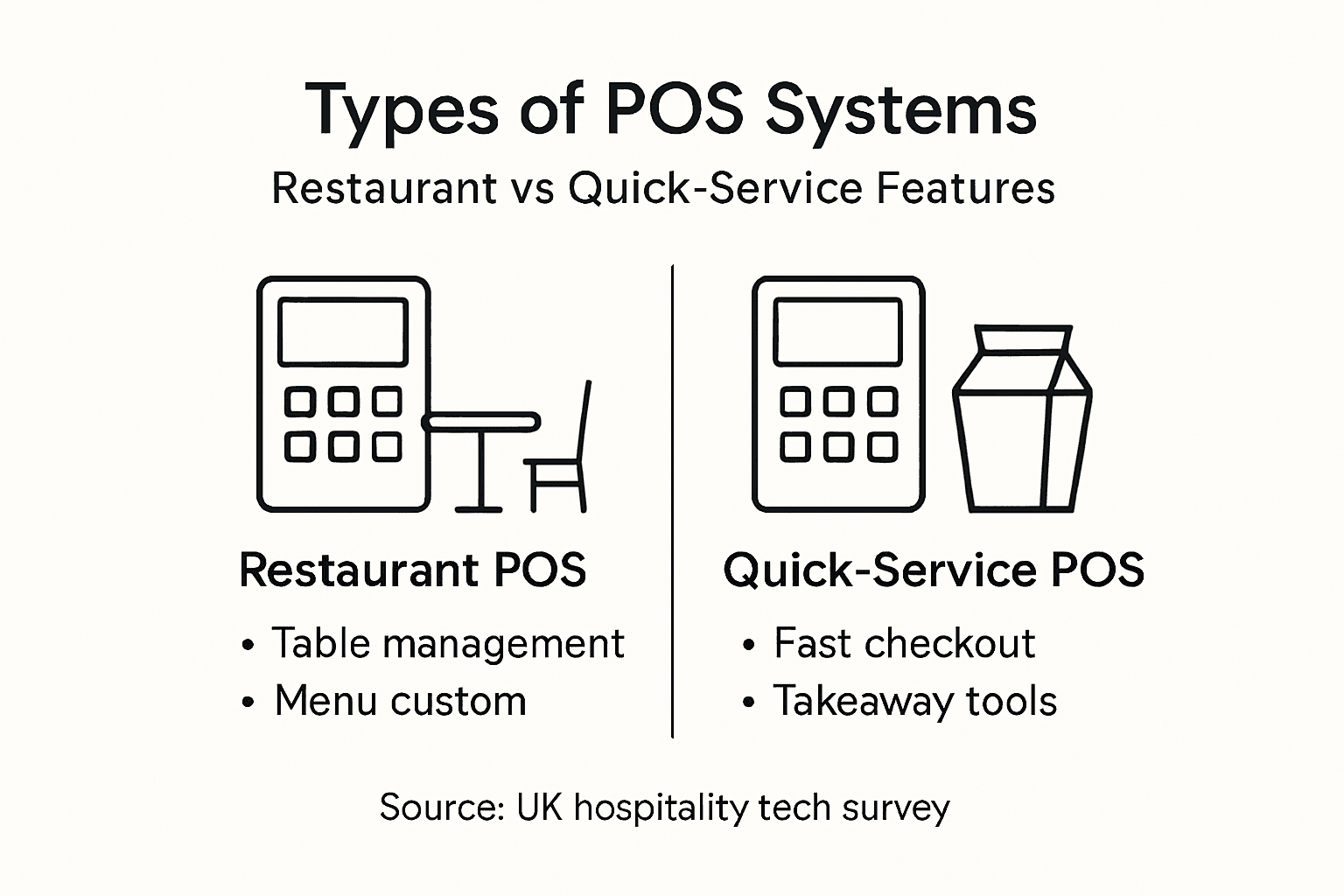
Restaurant POS systems typically feature comprehensive table management capabilities, enabling staff to track orders, manage seating arrangements, split bills, and process multiple payment types seamlessly. These systems often integrate kitchen display screens, allowing direct communication between front-of-house staff and kitchen personnel, reducing order processing times and minimising communication errors. Additional features might include menu customisation, inventory tracking for ingredients, and staff performance monitoring.
For quick-service venues like cafes and takeaways, POS systems are designed for rapid transaction processing and efficiency. These systems prioritise speed, with intuitive interfaces that support quick order entry, real-time menu updates, and integration with online ordering platforms. Mobile POS capabilities have become increasingly important, allowing staff to process orders directly at the customer’s table or during peak service periods, significantly reducing queue times and improving overall customer experience.
Pro tip: When selecting a hospitality POS system, prioritise solutions that offer flexible configuration, seamless third-party integrations, and scalable features that can adapt to your specific business growth strategy.
Below is a comparison of restaurant versus quick-service POS system features:
| Feature | Restaurant POS Systems | Quick-Service POS Systems |
|---|---|---|
| Table Management | Tracks seating and split bills | Not typically required |
| Kitchen Integration | Sends orders to kitchen displays | Often limited or streamlined |
| Menu Customisation | Supports complex, detailed menus | Focused on speed and simplified options |
| Mobile Capabilities | Used for tableside ordering and payment | Enables rapid counter or in-queue transactions |
| Online Ordering | Integrated for delivery and reservations | Integrated for takeaways and fast service |
Benefits for Restaurant and Café Operations
Point of Sale (POS) systems have revolutionised operational efficiency for restaurants and cafés by transforming traditional management approaches. Restaurant operational workflows now leverage sophisticated technologies that streamline every aspect of business management, from order processing to financial reporting.
The primary operational benefits include dramatically enhanced order accuracy and service speed. Modern POS systems enable real-time communication between front-of-house staff and kitchen teams, reducing human error and minimising delays. Detailed digital order tracking allows managers to monitor transaction flows, identify potential bottlenecks, and optimise staff deployment during peak service hours. Advanced inventory management features automatically track ingredient usage, generate purchasing recommendations, and help prevent stock shortages or wastage.
Financial management becomes significantly more transparent and precise with integrated POS technologies. These systems provide comprehensive reporting capabilities, offering granular insights into sales performance, staff productivity, and customer purchasing patterns. Restaurant owners can generate instant reports on daily, weekly, and monthly revenues, analyse menu item profitability, and make data-driven decisions about pricing strategies, menu adjustments, and operational improvements. Additionally, built-in loyalty programme features help businesses cultivate repeat custom by tracking customer preferences and enabling targeted marketing initiatives.
Pro tip: Select a POS system with robust reporting and analytics features that provide actionable insights into your restaurant’s performance, enabling strategic decision-making and continuous operational improvement.
Security, Compliance, and Cost Considerations
Point of Sale (POS) systems require careful evaluation of financial investment, security protocols, and regulatory compliance to ensure comprehensive business protection. Secure payment infrastructure demands robust technological solutions that safeguard sensitive customer and financial information while maintaining operational efficiency.
Security considerations are paramount in modern POS technologies. Contemporary systems incorporate advanced encryption protocols, tokenisation techniques, and multi-factor authentication to prevent data breaches and protect against potential cybersecurity threats. Compliance with Payment Card Industry Data Security Standard (PCI DSS) regulations is crucial, requiring businesses to implement stringent security measures that protect customer payment information. These include secure network configurations, regular security assessments, and controlled access to sensitive transaction data.
Cost considerations extend beyond initial hardware and software investments. Businesses must evaluate total ownership expenses, including software licensing, hardware maintenance, staff training, and potential system upgrades. Cloud-based POS solutions offer more flexible pricing models, often reducing upfront capital expenditure through subscription-based services. Small to medium-sized hospitality businesses can benefit from scalable solutions that allow modular upgrades and pay-as-you-grow pricing structures, enabling more strategic financial planning and technology investment.
Pro tip: Conduct a comprehensive cost-benefit analysis that considers not just the initial investment, but long-term operational efficiencies, security capabilities, and potential return on technology investment.
Elevate Your Hospitality Business with Trusted POS Solutions
Managing complex hospitality operations demands reliable point of sale technology that drives accuracy, speed, and insightful reporting. As highlighted in the article “Point of Sale Technology Explained: Impact on UK Hospitality,” selecting integrated POS hardware and software that supports table management, kitchen integration, and real-time inventory tracking is essential. Common challenges like ensuring secure payments, streamlining order processing, and scaling with business growth require a partner who understands your unique needs.
At YCR Distribution, we specialise in providing bespoke solutions tailored for restaurants, cafés, and takeaways across the UK. Benefit from our extensive range of POS terminals, barcode scanners, and specialised software like SAMTOUCH and EZEEPOS designed to enhance operational efficiency and customer service. Whether upgrading your current system or implementing a new one, our trusted hardware brands and flexible software options deliver peace of mind with compliant security and next-day delivery.
Unlock your hospitality business’s full potential today. Discover how YCR’s comprehensive POS solutions can transform your service speed and accuracy while safeguarding sensitive payment data.
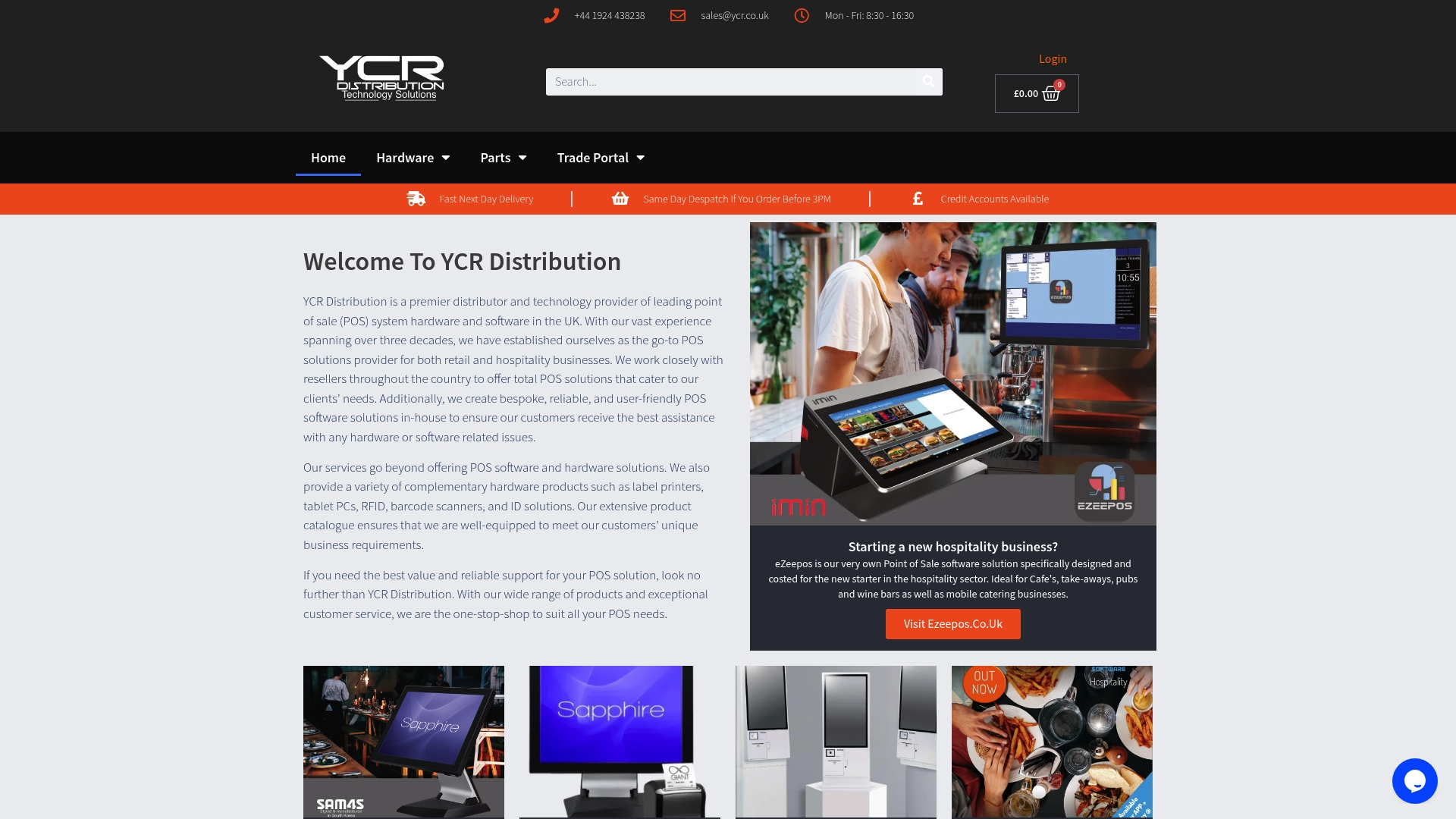
Explore our expert offerings now and equip your business with future-proof technology. Visit YCR Distribution to start improving your customer experience and operational control with tailored POS systems built for the hospitality sector.
Frequently Asked Questions
What is Point of Sale (POS) technology?
Point of Sale (POS) technology is a comprehensive solution that combines hardware and software to facilitate efficient payment processing and operational management for businesses, particularly in the retail and hospitality sectors.
What are the key components of a POS system?
A typical POS system includes hardware components like touchscreen terminals, card readers, barcode scanners, and printers, along with software that manages transactions, inventory, and reporting.
How does POS technology benefit restaurant and café operations?
POS technology enhances order accuracy and service speed, allows real-time communication between staff and kitchen, improves financial reporting, and helps track customer preferences for targeted marketing initiatives.
What should businesses consider when selecting a POS system?
Businesses should prioritise systems that offer robust integration capabilities, scalability, comprehensive reporting features, and security measures to protect sensitive customer information.