

Many UK hospitality and retail owners think POS hardware is just about processing sales, yet these systems now offer so much more than simple transactions. Choosing the right solution impacts everything from staff productivity to customer satisfaction and data-driven business decisions. This guide uncovers the reality behind common myths, explains how POS hardware goes beyond the till, and helps you pinpoint features that truly match your industry’s daily demands.
Table of Contents
- Defining POS Hardware and Common Myths
- Types of POS Hardware in Retail and Hospitality
- How POS Systems Integrate with Business Operations
- Essential Features and Industry-Specific Functions
- Costs, Risks and Mistakes to Avoid
Key Takeaways
| Point | Details |
|---|---|
| Importance of POS Hardware | POS hardware is essential for efficient transaction processing and inventory management, acting as a vital investment for business performance enhancement. |
| Diverse Configurations Available | Various POS hardware types, including fixed and mobile systems, cater to different business environments in retail and hospitality sectors. |
| Integration with Business Operations | Modern POS systems integrate across multiple functions, allowing businesses to make informed decisions based on comprehensive data analytics. |
| Costs and Financial Considerations | Businesses should be aware of the total ownership costs of POS systems, including initial hardware expenses, software licensing, and potential operational risks. |
Defining POS Hardware and Common Myths
Point of Sale (POS) hardware represents the physical technological infrastructure that enables businesses to process transactions, manage inventory, and provide comprehensive operational insights. POS hardware systems encompass a range of devices designed to streamline commercial interactions and support critical business functions.
At its core, POS hardware consists of several key components that work together to create a seamless transaction environment:
- Cash registers for financial processing
- Barcode scanners for precise product identification
- Card readers for digital payment acceptance
- Receipt printers for customer documentation
- Touchscreen terminals for user interface management
Contrary to popular misconceptions, modern POS hardware extends far beyond simple transaction processing. These systems now serve as sophisticated business intelligence tools that can track sales patterns, manage inventory in real-time, and provide actionable insights into operational performance.
Many UK business owners mistakenly believe POS hardware is an unnecessary expense or overly complex technology. In reality, these systems represent critical investments that can dramatically improve efficiency, reduce human error, and provide granular data about business performance.
Pro tip: When selecting POS hardware, prioritise scalable solutions that can grow alongside your business and integrate seamlessly with existing operational systems.
Types of POS Hardware in Retail and Hospitality
POS hardware has evolved significantly, offering diverse solutions tailored to different business models. POS systems now encompass multiple configurations designed to meet the unique operational requirements of retail and hospitality sectors.
Businesses can choose from several primary POS hardware configurations:
- Fixed POS Systems: Traditional countertop setups with stationary terminals
- Mobile POS Systems: Portable devices like tablets and smartphones enabling transactions anywhere
- Cloud-Based POS Systems: Internet-connected platforms allowing remote management
- Self-Service Kiosks: Customer-operated terminals for independent ordering
- Compact Touchscreen Systems: Lightweight terminals for smaller establishments
Each hardware type offers specific advantages for different commercial environments. Retail shops might prefer fixed systems with integrated cash drawers, while restaurants could benefit from mobile solutions that enable tableside ordering and payment processing.
The hospitality sector particularly appreciates flexible POS hardware that supports rapid service and accurate transaction tracking. Modern systems integrate seamlessly with inventory management, staff scheduling, and customer relationship management tools, transforming traditional point-of-sale interactions into sophisticated business intelligence platforms.
Here’s a comparison of POS hardware configurations and their optimal business environments:
| POS Hardware Type | Best Suited For | Key Advantage |
|---|---|---|
| Fixed System | Large retail stores | Robust integration, reliable printing |
| Mobile System | Restaurants, market stalls | Flexible placement, accelerated sales |
| Cloud-Based System | Multi-site chains | Remote access, simplified updates |
| Self-Service Kiosk | Fast food outlets, cinemas | Reduced staff need, quicker orders |
| Compact Touchscreen | Boutiques, small cafes | Space-saving design, intuitive use |
Pro tip: Consider your specific business workflow and customer interaction model when selecting POS hardware to ensure maximum operational efficiency.
How POS Systems Integrate with Business Operations
Modern POS systems represent far more than simple transaction processing tools. POS systems now integrate deeply with comprehensive business operations, transforming how UK businesses manage their daily workflows and strategic decision-making.
These sophisticated systems provide multi-dimensional integration across critical business functions:
- Inventory Management: Real-time stock tracking and automated reordering
- Employee Productivity: Performance monitoring and shift management
- Customer Relationship Management: Detailed purchase history and personalised marketing
- Financial Reporting: Instant sales analytics and revenue tracking
- Omnichannel Strategy: Seamless connections between online and physical sales platforms
By centralising data across multiple operational domains, POS systems enable businesses to make more informed, data-driven decisions. Retail and hospitality enterprises can now access granular insights into customer behaviour, inventory performance, and sales trends with unprecedented ease and accuracy.

The integration capabilities extend beyond traditional boundaries, allowing businesses to create personalised customer experiences, optimise staffing levels, and develop targeted marketing strategies. These systems effectively transform raw transactional data into strategic business intelligence, providing a competitive edge in increasingly complex commercial landscapes.
Below is a summary of business functions enhanced by integrated POS systems:
| Function | Enhancement Provided | Commercial Benefit |
|---|---|---|
| Inventory Management | Automated restocking | Minimised stock shortages |
| Employee Productivity | Shift monitoring | Improved scheduling efficiency |
| Customer Relationship | Personalised offers | Increased loyalty and retention |
| Financial Reporting | Instant analytics | Faster performance assessments |
| Omnichannel Strategy | Unified sales platform | Streamlined operations across sites |
Pro tip: Regularly update and maintain your POS system’s integrations to ensure maximum operational efficiency and data accuracy.
Essential Features and Industry-Specific Functions
POS hardware has evolved to offer sophisticated features that cater to the unique demands of different business sectors. POS systems deliver industry-specific functionality to support diverse operational requirements across retail and hospitality environments.
Key essential features of modern POS hardware include:
- Payment Processing: Multi-channel payment acceptance
- Security Mechanisms: Encryption and fraud prevention tools
- Data Analytics: Comprehensive sales and performance reporting
- Customer Management: Loyalty programme integration
- Inventory Control: Real-time stock monitoring
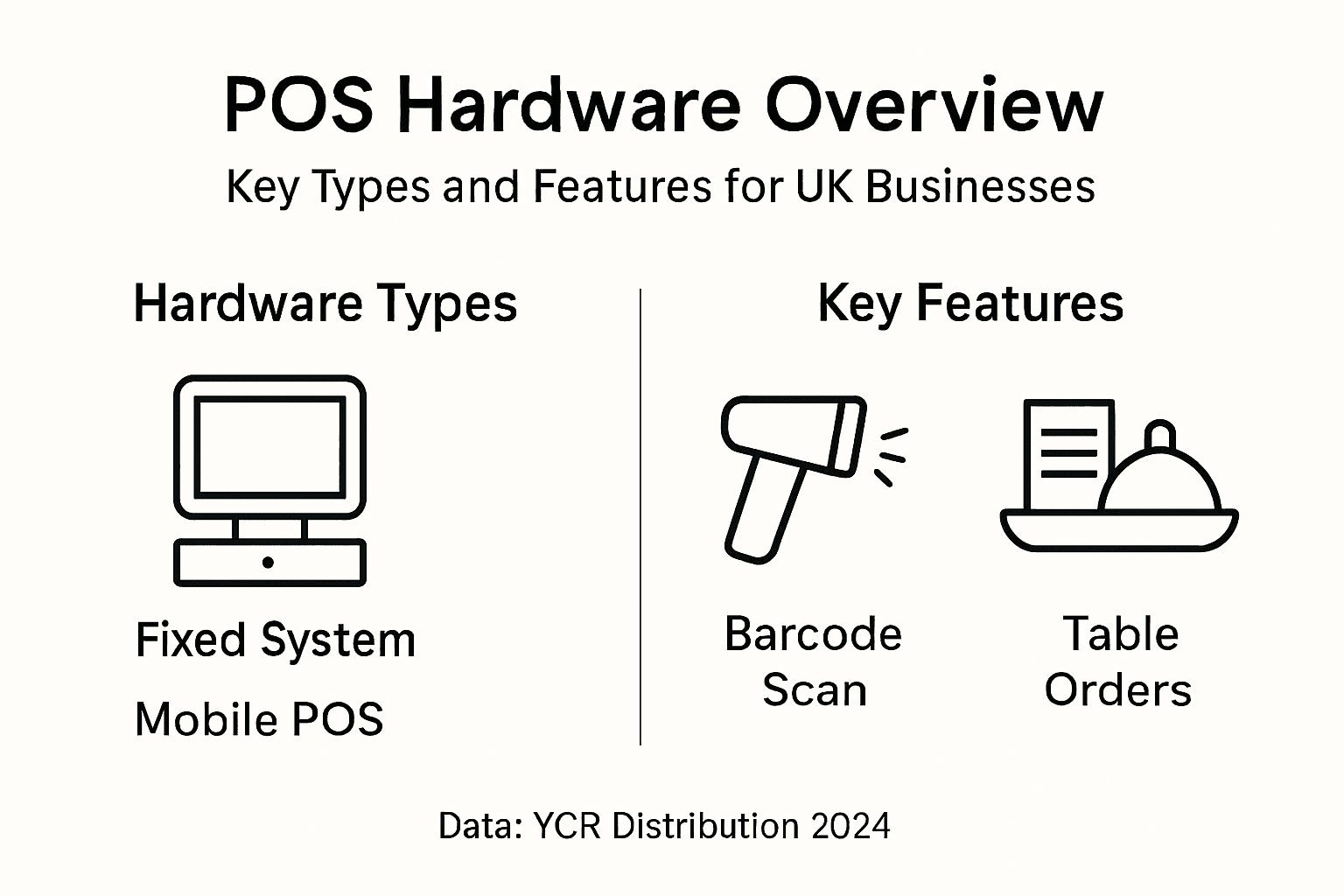
Retail businesses benefit from features like barcode scanning and detailed product tracking, while hospitality establishments require robust table management and split billing capabilities. These specialised functions transform POS hardware from simple transaction tools into comprehensive business management platforms.
The versatility of modern POS systems allows businesses to customise their hardware configurations. Restaurants can integrate kitchen display systems, while retail stores might prioritise advanced customer relationship management tools. This flexibility ensures that each business can develop a tailored technological solution that precisely matches their operational workflow.
Pro tip: Select POS hardware that offers modular functionality, allowing you to add or remove features as your business needs evolve.
Costs, Risks and Mistakes to Avoid
POS hardware investment involves complex financial considerations that extend far beyond initial purchase prices. UK businesses must carefully evaluate total ownership costs, potential operational risks, and strategic implementation challenges to ensure successful technological integration.
Key financial and operational risks include:
- Hardware Expenses: Initial equipment costs and recurring maintenance fees
- Software Licensing: Ongoing subscription and update expenses
- Integration Challenges: Potential system compatibility issues
- Security Vulnerabilities: Risk of data breaches and system compromises
- Operational Disruption: Potential downtime during system transitions
Many businesses underestimate the comprehensive expenses associated with POS hardware implementation. Beyond the initial hardware purchase, organisations must budget for software licensing, payment processing fees, staff training, technical support, and potential system upgrades. These cumulative costs can significantly impact a business’s financial planning and technological strategy.
Successful POS hardware adoption requires a holistic approach that balances technological capabilities with financial practicality. Businesses should conduct thorough research, request detailed pricing breakdowns, and carefully evaluate potential vendors based on long-term value rather than short-term cost savings. Understanding the full ecosystem of expenses and potential risks is crucial for making informed technological investments.
Pro tip: Request comprehensive total cost of ownership projections from vendors, including hidden expenses like training, maintenance, and potential future upgrades.
Discover the Perfect POS Hardware Solution for Your UK Business
Understanding the vital role POS hardware plays in streamlining retail and hospitality operations is the first step to transforming your business. If managing inventory, boosting employee productivity, and enhancing customer experience are your priorities, addressing the challenges of selecting scalable, secure, and integrated POS systems is essential. Businesses often struggle with hardware expenses, system compatibility, and complex software licensing — issues that can hold back growth and efficiency.
At YCR Distribution, we specialise in delivering trusted and innovative POS hardware and software solutions tailored specifically for UK retailers and hospitality providers. Whether you require powerful SAM4S terminals, versatile barcode scanners, or bespoke software like SAMTOUCH and EZEEPOS, our comprehensive range ensures seamless integration with your workflows to unlock real business intelligence and operational control.
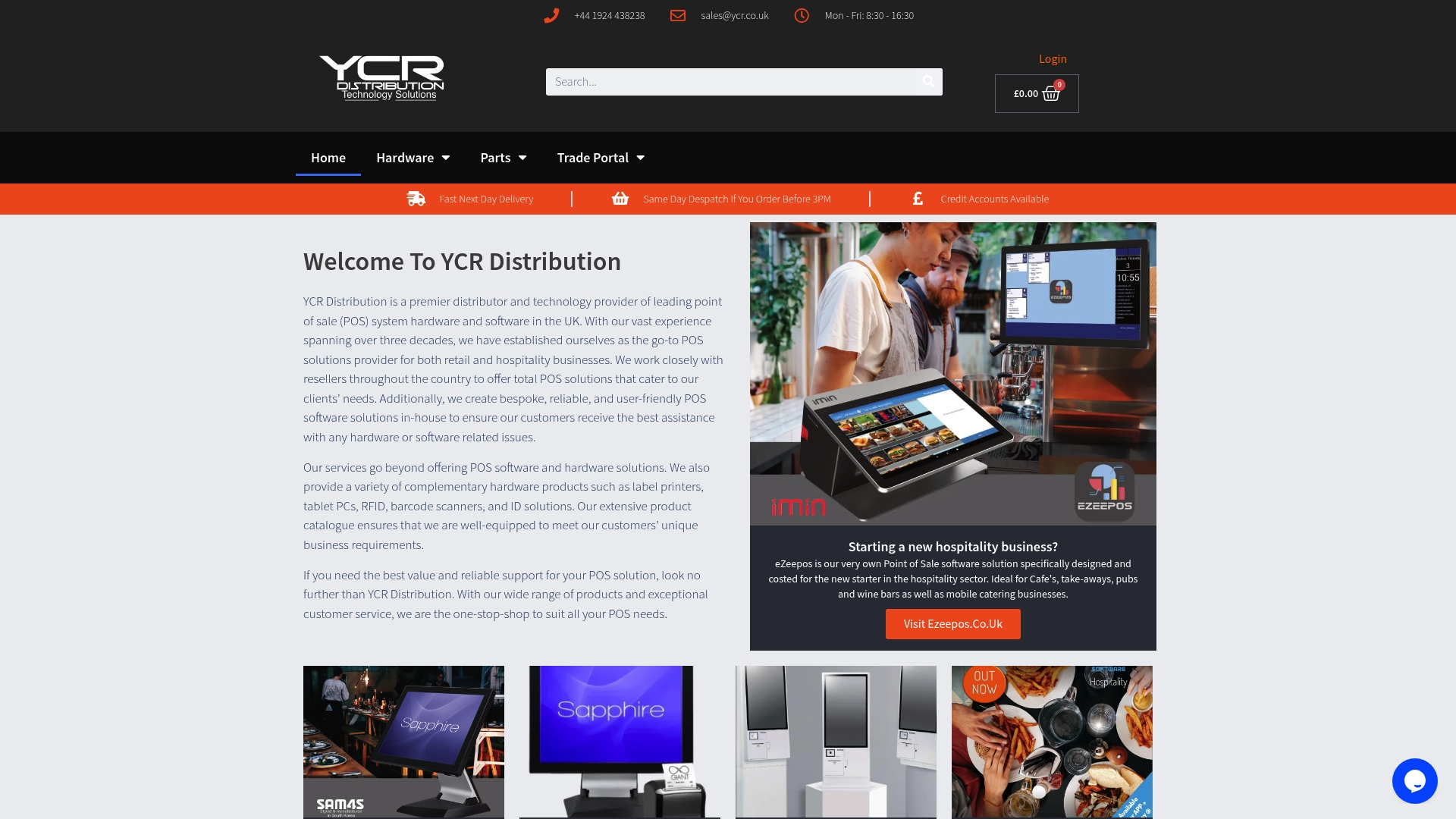
Take control of your point-of-sale technology today by exploring our reliable products and expert support. Visit YCR Distribution to browse our extensive catalogue and find out how our next-day delivery and credit account options can help you implement efficient, future-ready POS systems now. Don’t let outdated or complicated hardware limit your potential. Choose solutions built to grow with your business at YCR Distribution.
Frequently Asked Questions
What is POS hardware?
POS hardware refers to the physical devices used by businesses to process transactions, manage inventory, and gain insights into operations. Key components include cash registers, barcode scanners, card readers, and receipt printers.
How do POS systems integrate with business operations?
Modern POS systems go beyond transaction processing by integrating with various business functions such as inventory management, employee productivity tracking, customer relationship management, and financial reporting, allowing for data-driven decision-making.
What are the main types of POS hardware?
The main types of POS hardware include fixed systems for retail stores, mobile systems for restaurants, cloud-based systems for multi-site chains, self-service kiosks for fast food outlets, and compact touchscreen systems for smaller establishments.
What should I consider when choosing POS hardware for my business?
When selecting POS hardware, consider scalability for future growth, integration capabilities with existing systems, the specific needs of your business model, and the essential features you require, such as payment processing and inventory control.