

Every business owner in the UK knows that day-to-day operations can quickly become overwhelming as customer expectations rise and competition intensifies. A reliable Point of Sale system is more than just a tool for processing payments—it is the core of efficient sales management, inventory tracking, and enhancing customer service. This guide uncovers the key concepts and functions of modern POS systems, giving you insight into how the right technology can support growth and set your business apart.
Table of Contents
- POS Systems Explained: Core Concepts And Functions
- Modern POS Types For Retail And Hospitality
- Essential Features Driving Daily Operations
- Real World Benefits For Business Owners
- Key Risks, Costs And Migration Challenges
- Comparing POS To Alternative Solutions
Key Takeaways
| Point | Details |
|---|---|
| Comprehensive Management Tool | Modern POS systems are integral to retail and hospitality, serving as advanced business management solutions beyond simple transaction processing. |
| Diverse System Types | Different POS types cater to various business needs, ensuring tailored solutions for both retail and hospitality sectors. |
| Key Features Drive Efficiency | Essential features such as inventory management and reporting provide operational intelligence, fostering strategic decision-making. |
| Consider Migration Risks | Transitioning to a new POS system involves significant financial investment and potential technical challenges, requiring careful planning. |
POS Systems Explained: Core Concepts And Functions
Point of Sale (POS) systems represent the technological heartbeat of modern retail and hospitality businesses. These integrated systems combine sophisticated hardware and intelligent software to transform how transactions are processed, managed, and analysed. At its core, a POS system is far more than a simple cash register – it’s a comprehensive business management tool.
A modern POS system typically encompasses several critical components designed to streamline operations:
- Transaction Processing: Recording sales, processing payments across multiple methods
- Inventory Management: Real-time tracking of stock levels and product movements
- Customer Data Tracking: Capturing purchase history and enabling personalised marketing
- Reporting and Analytics: Generating detailed insights about sales performance
- Integration Capabilities: Connecting with accounting, ecommerce, and other business platforms
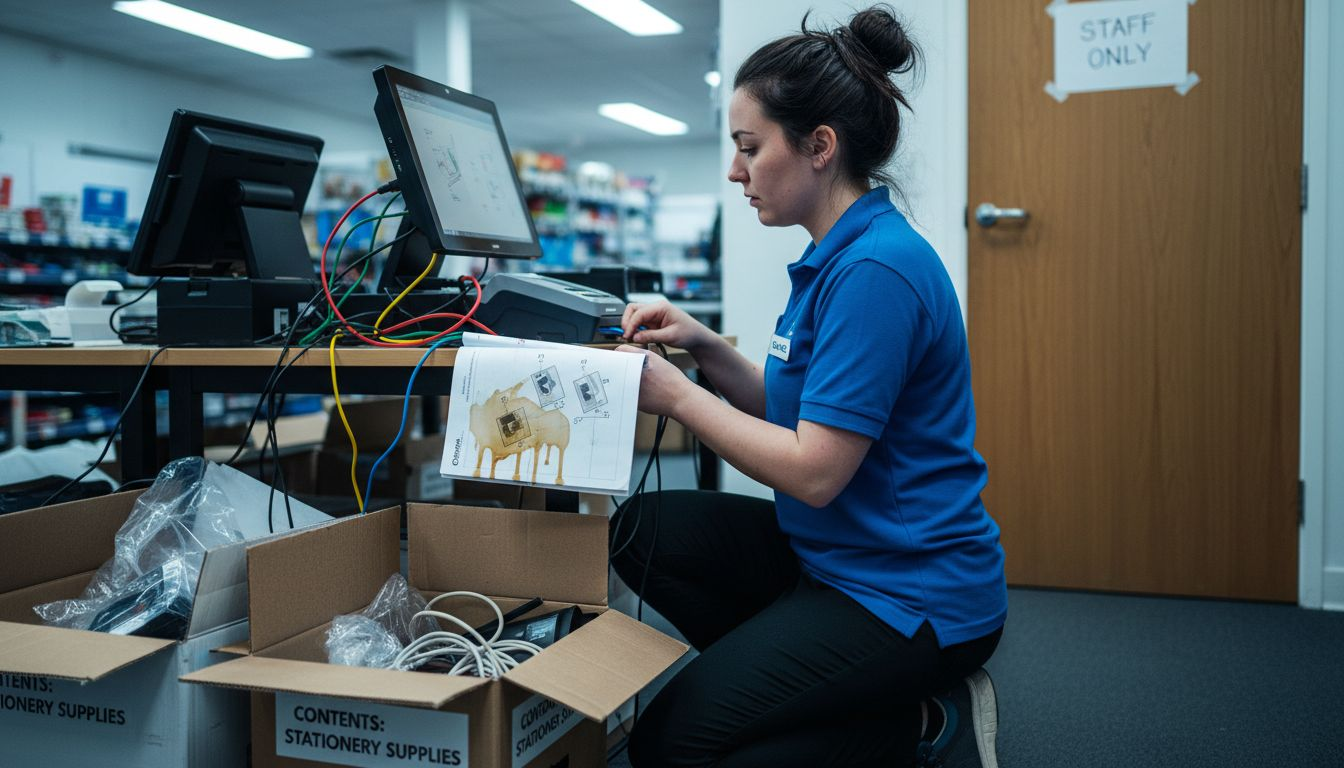
The fundamental architecture of a POS system involves both physical hardware and sophisticated software working in seamless harmony. Modern POS systems combine essential transaction tools that go well beyond traditional cash register functionality. These might include touchscreen terminals, barcode scanners, receipt printers, and secure payment processing interfaces that can handle multiple payment methods including contactless and digital transactions.
Pro tip: When selecting a POS system, prioritise solutions that offer scalable features and robust integration capabilities to support your business’s future growth.
Modern POS Types For Retail And Hospitality
The retail and hospitality industries have witnessed a remarkable transformation in Point of Sale (POS) technologies, with diverse systems emerging to meet specific business needs. Modern POS solutions are no longer one-size-fits-all, but rather sophisticated, adaptable platforms designed to address unique operational challenges across different sectors.
Key modern POS types include:
- Tablet-Based POS: Lightweight, mobile systems perfect for restaurants and pop-up retail environments
- Cloud-Based POS: Offering real-time data synchronisation and remote management capabilities
- Multichannel POS: Integrating online and offline sales channels for seamless customer experiences
- Specialised Hospitality POS: Tailored solutions for restaurants, cafés, and food service businesses
- Retail-Specific POS: Advanced systems with detailed inventory and customer relationship management features
Emerging technologies are transforming hospitality POS capabilities through sophisticated integrations of artificial intelligence, cloud computing, and mobile technologies. These advanced systems go beyond traditional transaction processing, offering comprehensive business intelligence tools that enable more strategic decision-making.
The evolution of POS technologies reflects the increasing complexity of modern business operations. Restaurant and retail managers now require systems that can simultaneously manage inventory, process payments, track customer preferences, and generate actionable insights. Modern POS platforms are essentially becoming full-scale business management ecosystems rather than mere transaction tools.
Here is a comparison of popular POS types and the sectors where they deliver the most value:
| POS Type | Ideal Sector/Use Case | Primary Advantage |
|---|---|---|
| Tablet-Based POS | Pop-up shops & cafés | Portability and flexibility |
| Cloud-Based POS | Multi-site retailers | Centralised, real-time data |
| Multichannel POS | Hybrid retailers | Unified sales management |
| Hospitality-Specific | Full-service restaurants | Order customisation support |
| Retail-Specific | Fashion or grocery stores | Detailed stock control |
Pro tip: Evaluate POS systems not just on current features, but on their potential for future scalability and technological adaptability.
Essential Features Driving Daily Operations
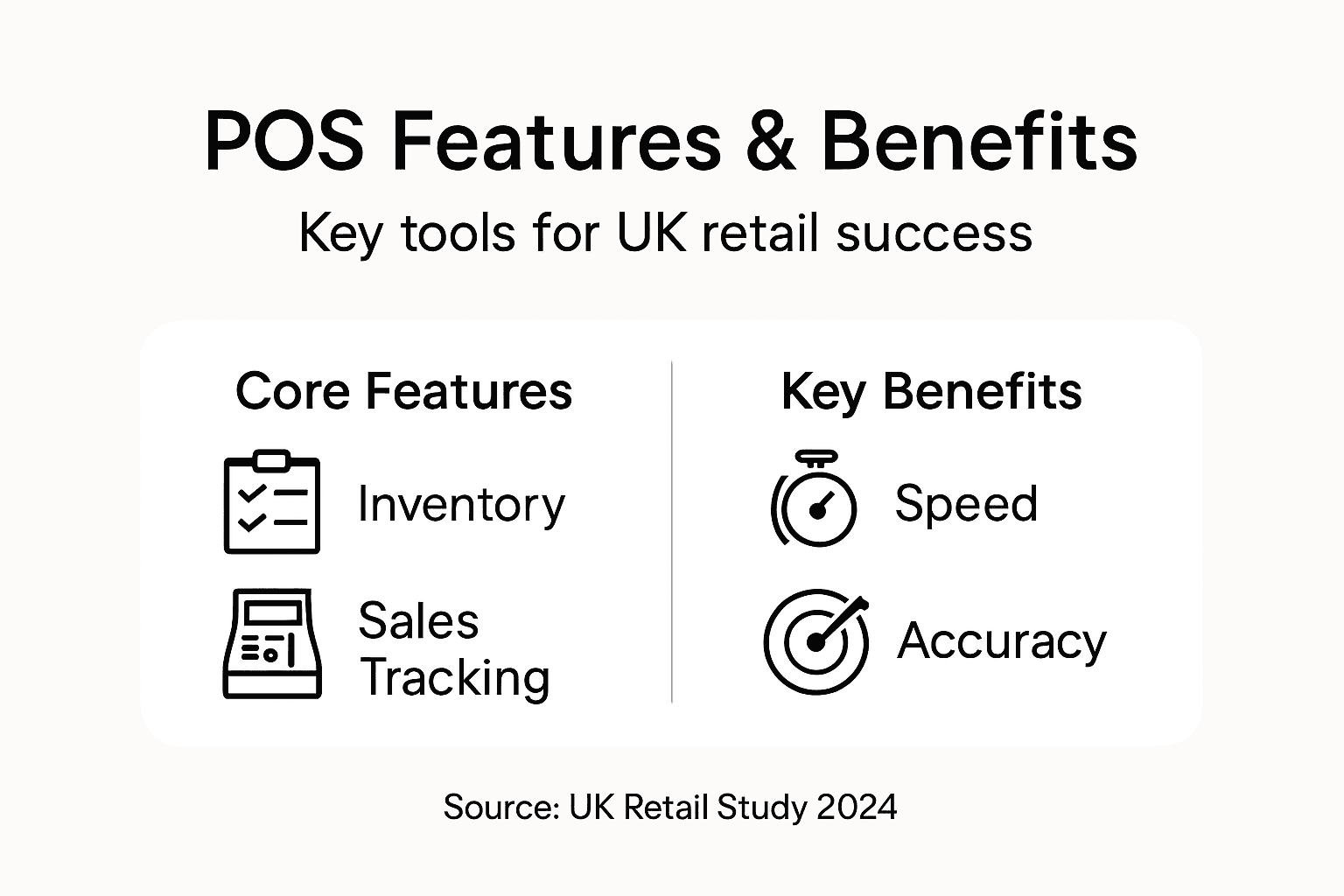
Modern Point of Sale (POS) systems have evolved far beyond simple transaction processing, becoming comprehensive business management tools that drive operational efficiency across retail and hospitality environments. Key features now encompass multiple critical business functions that transform how businesses manage daily operations, customer interactions, and strategic decision-making.
Critical POS system features include:
- Inventory Management: Real-time stock tracking and automated reordering
- Payment Processing: Multi-method support including contactless and digital payments
- Customer Loyalty Integration: Automated reward tracking and personalised marketing
- Employee Management: Staff scheduling, performance tracking, and access control
- Reporting and Analytics: Comprehensive sales insights and performance metrics
The sophistication of modern POS technologies means businesses can now access unprecedented levels of operational intelligence. Detailed reporting capabilities allow managers to track everything from individual product performance to staff productivity, enabling data-driven strategic planning.
The most advanced POS systems integrate seamlessly across multiple business functions, creating a unified platform that reduces manual work and minimises human error. By automating routine tasks and providing real-time insights, these systems enable business owners to focus on growth strategies rather than getting bogged down in administrative details.
The table below summarises the strategic impact of key POS system features on daily business operations:
| Feature | Business Impact | Managerial Benefit |
|---|---|---|
| Automated Inventory | Reduces overstock & shortages | Data-driven purchasing decisions |
| Loyalty Integration | Increases customer retention | Enables targeted campaigns |
| Employee Management | Optimises staff scheduling | Tracks productivity & reduces fraud |
| Advanced Analytics | Identifies sales trends quickly | Supports strategic planning |
Pro tip: Select a POS system that offers scalable features and robust integration capabilities to support your business’s future growth and technological evolution.
Real World Benefits For Business Owners
POS systems have transformed from simple transaction tools into powerful strategic assets that deliver tangible benefits across multiple business dimensions. Smart POS technologies are revolutionising operational capabilities by providing integrated solutions that extend far beyond traditional payment processing.
Key real-world benefits for business owners include:
- Operational Efficiency: Reducing manual administrative tasks and minimising human error
- Financial Insights: Generating comprehensive, real-time sales and performance reporting
- Inventory Management: Automated stock tracking and intelligent reordering systems
- Customer Experience: Faster transactions and personalised service capabilities
- Cost Reduction: Eliminating redundant processes and streamlining business workflows
Modern POS platforms act as comprehensive business intelligence hubs, offering unprecedented visibility into daily operations. Business owners can now access detailed analytics that were previously unavailable, enabling more informed strategic decision-making and helping to identify potential areas for growth and improvement.
The most significant advantage of contemporary POS systems lies in their ability to integrate multiple business functions seamlessly. By centralising data from sales, inventory, customer relationships, and financial reporting, these systems provide a holistic view of business performance that empowers owners to make proactive, data-driven choices.
Pro tip: Invest time in thoroughly understanding your chosen POS system’s full feature set to maximise its potential for business transformation.
Key Risks, Costs And Migration Challenges
Transitioning to a new Point of Sale (POS) system represents a significant strategic investment that requires careful planning and risk management. System modernization involves complex technical and operational challenges that demand a comprehensive, multi-dimensional approach to implementation.
Key risks and potential challenges during POS migration include:
- Financial Investment: Substantial upfront costs for hardware, software, and training
- Data Migration: Potential loss or corruption of existing customer and sales records
- Technical Integration: Compatibility issues with existing business systems
- Staff Training: Learning curve and potential productivity disruption
- Security Vulnerabilities: Risks associated with transitioning between system architectures
Businesses must approach POS system migration as a strategic transformation rather than a simple technological upgrade. This requires a holistic assessment of current operational processes, future business needs, and the specific capabilities of potential new systems.
Successful migration demands a phased implementation strategy that minimises operational disruption. This typically involves thorough system testing, comprehensive staff training, parallel running of old and new systems, and a carefully planned cutover process that ensures minimal downtime and data integrity.
Pro tip: Conduct a comprehensive pilot programme with a small team before full-scale implementation to identify and mitigate potential migration challenges.
Comparing POS To Alternative Solutions
Business owners face a complex landscape of transaction management technologies, each with distinct advantages and limitations. Systematic analysis of alternative solutions requires a nuanced understanding of how different platforms address specific operational requirements.
Alternative solutions to traditional POS systems include:
- Mobile Payment Platforms: Flexible, low-cost options for small businesses
- Traditional Cash Registers: Basic, low-technology solutions with minimal setup costs
- Cloud-Based Payment Systems: Scalable solutions with remote management capabilities
- Self-Service Kiosks: Automated transaction platforms reducing labour costs
- Integrated ERP Solutions: Comprehensive systems combining multiple business functions
The selection process demands careful evaluation of each platform’s strengths and limitations. While traditional cash registers offer simplicity, they lack the sophisticated reporting and integration capabilities of modern POS systems. Mobile payment platforms provide flexibility but may compromise security and detailed transaction tracking.
Successful technology selection requires businesses to prioritise their specific operational needs. Factors such as transaction volume, industry complexity, integration requirements, and budget constraints will ultimately determine the most appropriate solution. POS systems typically emerge as the most comprehensive option for businesses seeking robust, scalable transaction management technologies.
Pro tip: Conduct a thorough cost-benefit analysis comparing potential solutions, considering not just immediate expenses but long-term operational efficiency and scalability.
Elevate Your Retail and Hospitality Operations with Expert POS Solutions
The article highlights the critical challenges UK retail and hospitality businesses face in managing complex operations, from seamless transaction processing to real-time inventory control and insightful reporting. With goals focused on operational efficiency, customer loyalty, and scalable growth, it is clear that investing in advanced POS systems is essential to transform everyday business management. At YCR Distribution, we understand these pain points and specialise in delivering tailored solutions that combine trusted hardware and powerful software to meet the evolving needs of your business.
Discover the benefits of integrating scalable POS technology designed to simplify your operations and enhance customer experiences. Whether you require robust terminals, intuitive tablet-based systems, or bespoke software like SAMTOUCH and EZEEPOS, YCR offers comprehensive solutions that ensure smooth adaptation and future-ready performance. Experience the advantage of next-day delivery and expert support that lets you focus on what matters most — growing your business with confidence.
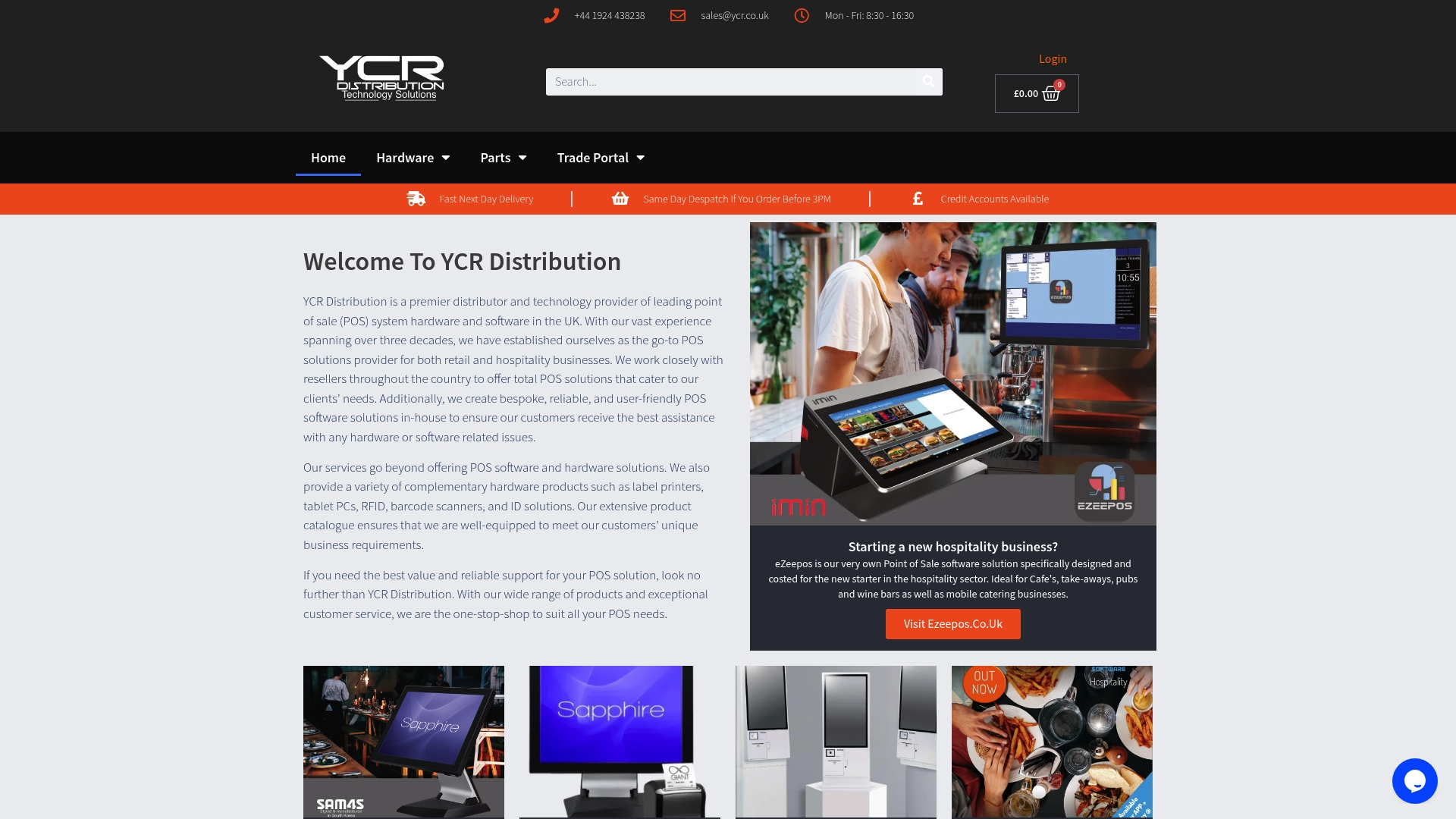
Ready to transform your business with reliable, integrated POS solutions that address today’s challenges and tomorrow’s opportunities? Visit YCR Distribution to explore our extensive range of POS hardware and software or learn more about how our UK-wide services can streamline your retail or hospitality operations. Start your journey toward smarter business management today by connecting with experts who understand your industry at YCR Distribution.
See why our customers trust YCR for their POS needs and experience the difference in operational efficiency and customer satisfaction. Explore our offering now at https://ycr.co.uk.
Frequently Asked Questions
What is a POS system and how does it work?
A POS system, or Point of Sale system, is a combination of hardware and software used to process transactions and manage various business functions. It records sales, processes payments, tracks inventory, collects customer data, and generates reports about sales performance.
What are the benefits of using a cloud-based POS system?
Cloud-based POS systems offer real-time data synchronisation and remote management capabilities, allowing business owners to access their sales and inventory information from anywhere, which facilitates better decision-making and operational efficiency.
How do POS systems enhance customer experience?
POS systems enhance customer experience by enabling faster transactions, personalised services, and loyalty programmes. They can track customer preferences and purchase history, allowing businesses to tailor marketing efforts and improve customer satisfaction.
What should businesses consider when choosing a POS system?
When choosing a POS system, businesses should consider factors such as scalability, integration capabilities with other technologies, critical features like inventory management and reporting, as well as the system’s overall ease of use for staff and customers.