
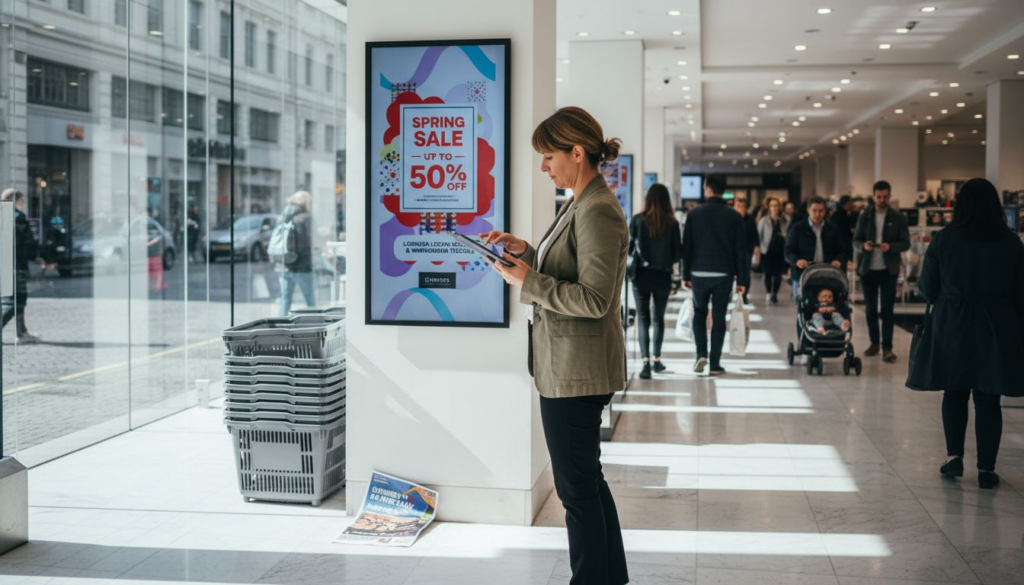
Digital signage transforms how UK retail and hospitality businesses connect with customers. Studies show that digital displays increase customer dwell time by up to 30%, directly boosting impulse purchases and enhancing brand perception. This guide explains what digital signage is, how it works, its proven benefits for engagement and operations, and practical steps to implement it effectively in your business.
Table of Contents
- What Is Digital Signage?
- How Digital Signage Enhances Customer Engagement
- Operational Benefits For Retail And Hospitality
- Common Misconceptions About Digital Signage
- Types And Comparison Of Digital Signage Solutions
- Real-World Case Studies In UK Retail And Hospitality
- How To Choose And Implement Digital Signage Solutions
- Discover Tailored Digital Signage Solutions With YCR
- Frequently Asked Questions About Digital Signage
Key Takeaways
| Point | Details |
|---|---|
| Enhanced Customer Engagement | Digital signage increases dwell time by 30% and lifts impulse purchases by up to 25%. |
| Operational Efficiency | Instant content updates reduce communication errors and eliminate paper waste in multi-location operations. |
| Accessible Solutions | Cloud-based CMS platforms reduce management costs by 25%, making signage affordable for UK SMEs. |
| Flexible Technology Options | LCD, LED, and touchscreen displays suit different environments, budgets, and interaction requirements. |
| Proven ROI | UK retailers report 15-20% increases in average order value and customer satisfaction within months of deployment. |
What is Digital Signage?
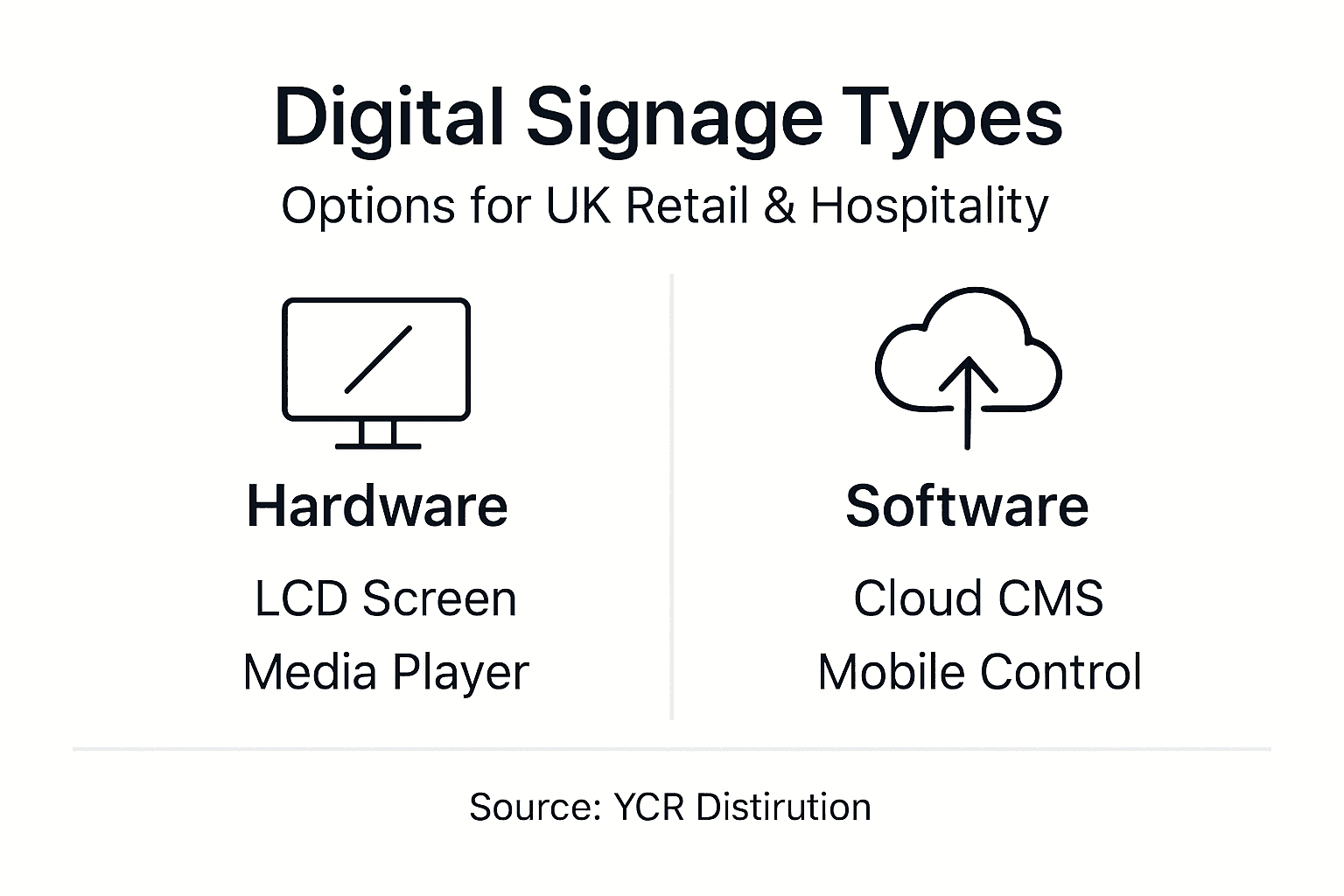
Digital signage is a networked system of digital displays that delivers real-time, targeted visual content to customers and staff. Unlike static posters, these screens update instantly, allowing businesses to adapt messaging based on time, location, and audience demographics. The technology combines display hardware with content management software (CMS) to schedule, publish, and monitor visual communications across single or multiple locations.
Common display types in UK retail and hospitality include:
- LCD screens: Indoor displays offering crisp image quality for menus, promotions, and wayfinding.
- LED panels: High-brightness outdoor-rated displays for storefronts and drive-throughs.
- Interactive touchscreens: Customer-facing interfaces for self-service ordering and product exploration.
YCR’s trade digital signage solutions operate 24/7, updating content in under 5 seconds through cloud-based CMS platforms. This responsiveness lets you promote lunch specials during midday, switch to dinner menus by evening, and highlight weekend events without printing a single poster. For restaurants managing peak hours or retailers running flash sales, this agility directly impacts revenue by keeping messaging relevant when customers are ready to buy.
Pro Tip: Start with one high-traffic display location to test content types and measure engagement before expanding to multiple screens.
How Digital Signage Enhances Customer Engagement
Digital signage increases customer dwell time by up to 30%, giving you more opportunities to influence purchase decisions. When customers spend longer in your space viewing dynamic content, impulse purchase rates climb by up to 25%. This uplift stems from timely, visually compelling messages that traditional signage cannot deliver.
Key engagement mechanisms include:
- Dynamic content: Video loops and animations capture attention 400% more effectively than static images.
- Targeted messaging: Schedule promotions by time of day or customer demographics to maximize relevance.
- Interactive experiences: Touchscreens let customers explore menus, customize orders, and access loyalty programs independently.
- Real-time updates: Display live wait times, order status, or inventory availability to reduce perceived delays.
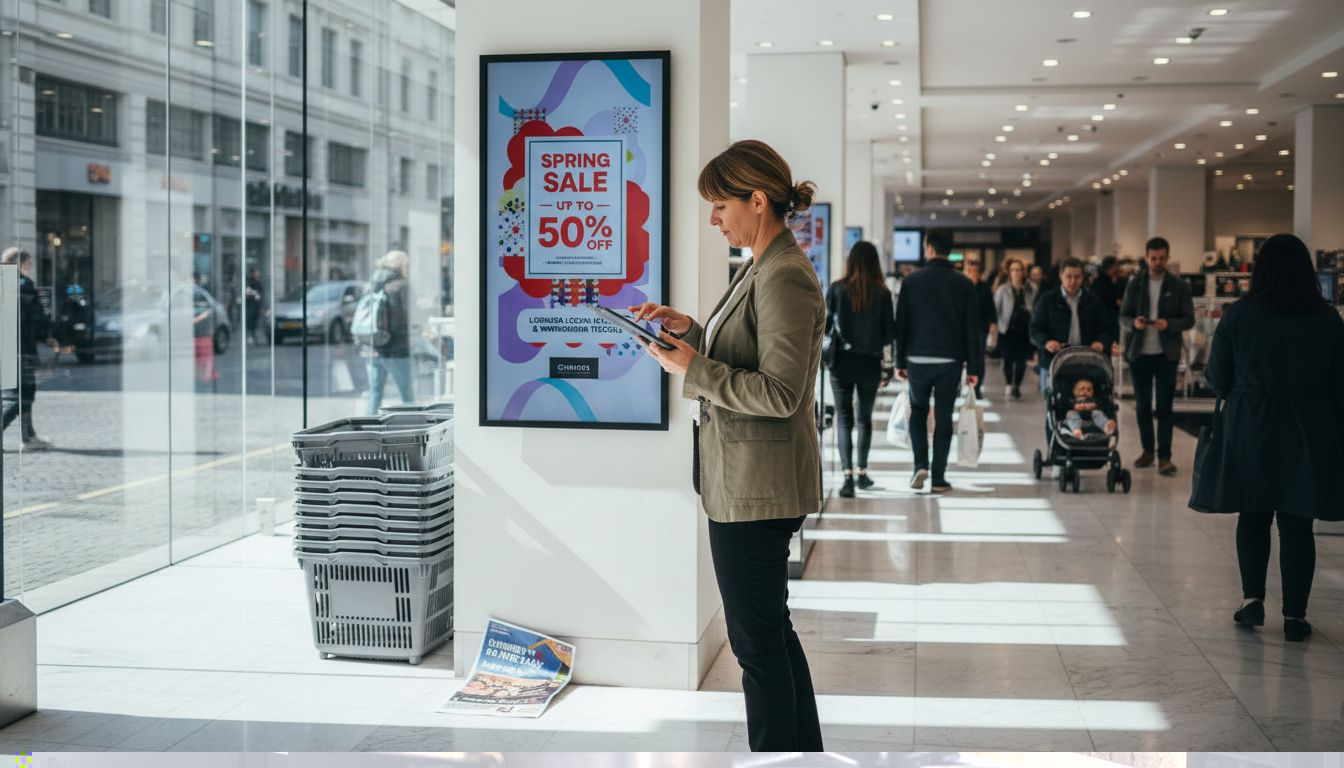
UK hospitality venues use digital signage to improve customer satisfaction by presenting visually rich menu boards with appetizing food photography. Retailers deploy window displays showcasing current promotions to convert foot traffic into store visits. Both applications create modern brand experiences that differentiate you from competitors still relying on printed materials.
Pro Tip: Pair digital menu boards with high-margin item visuals during peak hours to subtly guide customers toward profitable purchases without pushy sales tactics.
Operational Benefits for Retail and Hospitality
Beyond customer-facing benefits, digital signage streamlines internal operations and staff communication. Instant content updates enable faster menu changes and promotional agility, reducing the lag between decision and execution. When you can update 20 screens across multiple locations from one dashboard, operational consistency improves dramatically.
Operational advantages include:
- Reduced errors: Staff view current pricing, ingredients, and prep instructions on kitchen displays, minimizing order mistakes.
- Faster communication: Push urgent messages, shift schedules, or policy updates to back-of-house screens instantly.
- Sustainability gains: Eliminate printing costs and paper waste by digitizing notices, training materials, and promotional posters.
- Multi-location coordination: Ensure brand consistency across franchises or chains with centralized content management.
YCR’s mobile POS and digital signage integration lets hospitality venues display real-time order queues, improving kitchen workflow and reducing ticket times. Retail stores connect inventory systems to signage, automatically removing out-of-stock items from promotional displays. These integrations minimize manual intervention while keeping customer-facing information accurate.
The role of POS in hospitality operations extends to digital signage when systems share data, creating seamless experiences where signage reflects current inventory, wait times, and service availability without staff updating screens manually.
Common Misconceptions About Digital Signage
Several myths prevent UK SMEs from adopting digital signage despite its proven benefits. Understanding the reality behind these misconceptions helps you make informed technology investments.
Myth: Digital signage costs too much for small businesses.
Cloud-based CMS platforms reduce content management expenses by 25% compared to legacy systems requiring dedicated servers. Entry-level displays start under £500, with scalable monthly CMS subscriptions from £20. You control costs by starting small and expanding as ROI proves out.
Myth: Operating digital signage requires technical expertise.
Modern CMS interfaces mirror familiar tools like social media schedulers. Drag-and-drop editors let non-technical staff create and publish content in minutes. YCR provides setup support and training, ensuring your team feels confident managing displays from day one.
Myth: Only large enterprises benefit from digital signage.
Scalable solutions cater to single-location cafes and multi-site retail chains alike. A independent coffee shop gains as much advantage from displaying daily specials digitally as a national restaurant chain promoting nationwide campaigns. The technology adapts to your scale and budget.
Pro Tip: Request demo access to CMS platforms before purchasing to verify the interface matches your team’s technical comfort level and workflow preferences.
Types and Comparison of Digital Signage Solutions
Selecting appropriate hardware and software requires understanding how different technologies align with your environment, budget, and interaction requirements. This comparison framework helps you evaluate options systematically.
| Feature | LCD Displays | LED Panels | Interactive Touchscreens |
|---|---|---|---|
| Best Use | Indoor menus, promotions | Outdoor storefronts, drive-throughs | Self-service ordering, wayfinding |
| Brightness | 300-700 nits | 2,500-10,000 nits | 400-800 nits |
| Durability | Standard (2-3 years) | High (5-7 years) | Medium (3-4 years) |
| Cost Range | £400-£1,200 | £1,500-£8,000 | £1,000-£3,500 |
| Installation | Wall mount, simple | Professional outdoor mounting | Counter/kiosk mount |
Key CMS capabilities to evaluate include:
- Scheduling: Automate content changes by time, day, or triggered events.
- Multi-location management: Control dispersed displays from centralized dashboards.
- Template libraries: Access pre-designed layouts reducing content creation time.
- Analytics: Track viewer engagement, dwell time, and content performance.
YCR’s guidance on choosing POS systems applies equally to digital signage: match technology to actual business needs rather than aspirational features you won’t use. A small cafe benefits more from one high-quality indoor LCD with simple CMS than multiple mediocre screens with complex software no one masters.
Real-World Case Studies in UK Retail and Hospitality
UK businesses across retail and hospitality sectors document measurable improvements after implementing digital signage. These examples from retail technology deployments demonstrate realistic outcomes for different business types.
| Business Type | Implementation | Measurable Result |
|---|---|---|
| Quick-service restaurant chain (45 locations) | Digital menu boards with dynamic pricing | 20% reduction in order errors, 15% increase in average order value |
| Independent boutique retailer | Window display with promotional video loops | 30% increase in foot traffic conversion during campaign periods |
| Hotel conference center | Interactive wayfinding touchscreens | 40% reduction in guest services inquiries about directions |
| Cafe group (8 locations) | Centralized CMS managing daily specials | Staff time saved: 6 hours weekly eliminating manual board updates |
The restaurant chain’s success stemmed from highlighting high-margin combo meals through appetizing visuals timed to peak ordering hours. The boutique retailer rotated window content every 15 seconds, maintaining visual interest for passing pedestrians. Both examples show how strategic content drives results beyond simply installing screens.
These case studies validate digital signage as an investment with documented ROI rather than experimental technology. Businesses report payback periods of 8 to 18 months depending on implementation scale and content strategy effectiveness.
How to Choose and Implement Digital Signage Solutions
Successful deployment follows a structured approach aligning technology with business objectives. These steps guide UK retail and hospitality managers through selection and implementation.
-
Define objectives: Clarify whether your priority is customer engagement, operational communication, or both. Objectives determine display placement, content strategy, and success metrics.
-
Assess environment: Evaluate lighting conditions, viewing distances, and ambient noise. Outdoor locations require high-brightness displays. Busy environments need bold, simple messaging readable in seconds.
-
Evaluate budget: Include hardware, CMS subscriptions, installation, and ongoing content creation costs. Cloud-based solutions reduce upfront investment compared to on-premise servers.
-
Select hardware: Match display types to environment. Indoor retail suits LCD. Outdoor hospitality requires LED. Self-service applications need touchscreens. Prioritize commercial-grade displays with 3-year minimum warranties.
-
Choose CMS platform: Test interfaces with actual users. Verify scheduling, multi-location management, and template features meet workflow requirements. Confirm technical support availability.
-
Develop content strategy: Plan messaging themes, update frequency, and visual standards. Establish who creates content and approval processes. Simple, consistent content outperforms sporadic complexity.
-
Train staff: Ensure team members understand basic operations, content publishing, and troubleshooting. Schedule refresher training as staff turnover occurs.
-
Measure performance: Track engagement metrics, sales data, and operational efficiency. Adjust content strategy based on what data reveals about customer response.
YCR’s system selection guidance emphasizes starting with core requirements and expanding capabilities as you gain experience. This approach prevents over-investing in features you don’t use while ensuring foundational needs are met reliably.
Discover Tailored Digital Signage Solutions with YCR
Ready to boost customer engagement and streamline operations with digital signage? YCR Distribution offers comprehensive solutions tailored specifically for UK retail and hospitality businesses. We combine three decades of POS expertise with cutting-edge display technology to deliver systems that work reliably from day one.
Our trade digital signage solutions include hardware selection, CMS integration, installation support, and ongoing technical assistance. Whether you’re launching your first display or expanding to multiple locations, we guide you through every decision. Explore our digital signage solutions for UK retail and hospitality offerings to see how we help businesses like yours achieve measurable results.
Frequently Asked Questions About Digital Signage
What is the typical cost range for digital signage systems for SMEs?
Entry-level single-display systems start around £600 to £1,000 including a commercial LCD screen and basic cloud CMS subscription. Multi-location deployments with advanced features range from £3,000 to £10,000 depending on screen quantity, hardware quality, and CMS capabilities. Cloud-based solutions reduce upfront costs by 30% compared to on-premise systems requiring dedicated servers.
Can digital signage software be managed remotely?
Yes, modern cloud-based CMS platforms enable complete remote management from any internet-connected device. You can schedule content, update messaging, monitor display status, and troubleshoot issues from smartphones, tablets, or computers without physically accessing screens. This capability proves essential for multi-location operations where traveling to each site wastes time and money.
How long does it take to see measurable results post-implementation?
Most UK businesses report noticeable customer engagement improvements within 4 to 8 weeks as content strategies refine based on early performance data. Sales impacts like increased average order value typically appear within 2 to 3 months. Operational efficiency gains such as reduced communication errors manifest immediately once staff adapt to new workflows, often within the first week.
Is specialized staff training required to operate digital signage systems?
No specialized technical training is necessary for modern CMS platforms designed with intuitive interfaces. Most staff become proficient creating and publishing basic content within 2 to 3 hours of initial training. Advanced features like conditional triggers or data integrations may require additional guidance, but day-to-day operations remain accessible to non-technical users comfortable with basic computer skills.
What types of digital signage are best for outdoor hospitality venues?
High-brightness LED panels rated for 2,500 nits or higher perform best in direct sunlight common to UK outdoor dining areas, patios, and drive-throughs. These displays require weatherproof enclosures rated IP65 or higher to withstand rain and temperature fluctuations. Commercial-grade outdoor displays include thermal management systems preventing overheating during summer and condensation during winter, ensuring year-round reliability.