
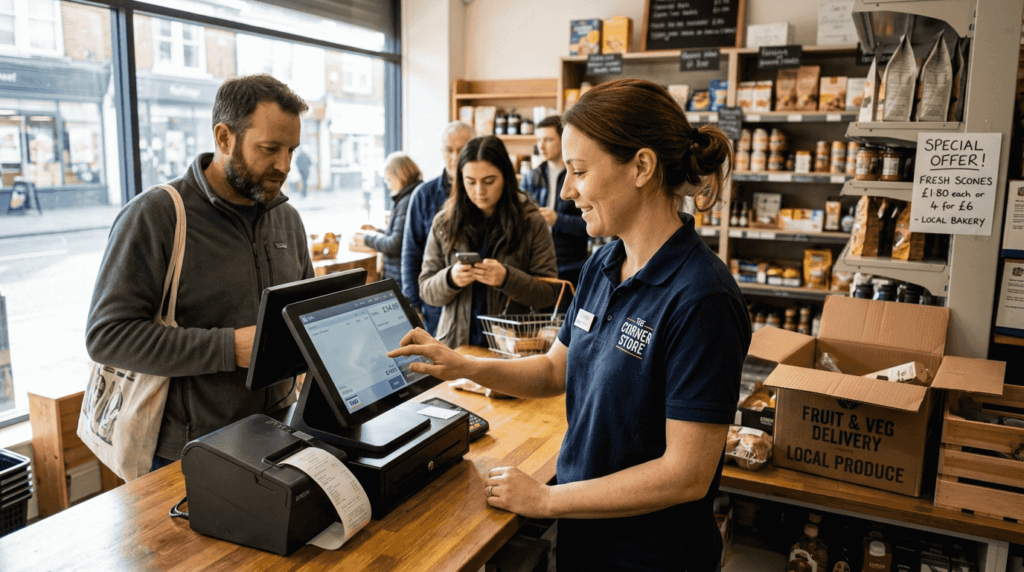
Modern POS systems are no longer simple cash registers. In 2026, 74% of businesses prefer cloud-based POS software, yet many retail and hospitality owners still underestimate the competitive edge these platforms provide. From unified inventory control to AI-driven analytics, modern POS technology has become the operational backbone for cafés, restaurants, retail shops, and convenience stores across the UK. This guide explores why upgrading matters, which system fits your business model, and how to navigate the transition successfully whilst maximising efficiency and customer satisfaction.
Table of Contents
- The Rise Of Modern Pos Systems In Retail And Hospitality
- Core Features That Set Modern Pos Systems Apart
- Which Modern Pos System Fits Your Business? Tailoring For Retail And Hospitality
- Overcoming Challenges And Maximising Benefits When Upgrading Your Pos
- Explore Tailored Pos Solutions For Your Business
Key takeaways
| Point | Details |
|---|---|
| Unified operations | Modern POS systems integrate inventory, customer management, payments, and analytics into one platform. |
| Cloud preference | Cloud-based solutions dominate with 74% business adoption, offering scalability and remote access. |
| Compliance advantage | Upgrading ensures PCI DSS security and HMRC digital VAT record compliance. |
| Tailored solutions | Retail-specific, hospitality-focused, and multichannel POS types address distinct operational needs. |
| Strategic investment | Long-term efficiency gains and customer experience improvements justify upfront costs. |
The rise of modern POS systems in retail and hospitality
The global POS software market is valued at $13.53 billion in 2025, reflecting rapid adoption across sectors. Retail and hospitality businesses are driving this growth, recognising that modern POS systems are evolving into cloud-native, AI-driven platforms central to retail operations. This shift isn’t just about keeping pace with technology. It’s about survival in an increasingly competitive marketplace where customer expectations and operational complexity continue to escalate.
Cloud-based systems dominate because they offer unmatched agility. You can access real-time sales data from anywhere, manage multiple locations seamlessly, and scale operations without hefty infrastructure investments. Traditional on-premise systems simply can’t match this flexibility. The role of POS in retail has expanded from transaction processing to comprehensive business intelligence, transforming how owners make decisions.
AI integration is another game changer. Modern platforms analyse purchasing patterns, predict inventory needs, and identify customer preferences automatically. This intelligence helps you stock the right products, optimise pricing strategies, and personalise marketing efforts. For a busy café owner juggling morning rushes and afternoon lulls, these insights mean fewer stockouts and better labour scheduling.
Key advantages of cloud-native POS systems include:
- Instant software updates without manual intervention or downtime
- Multi-location synchronisation for chains and franchises
- Remote troubleshooting and support from providers
- Lower upfront costs compared to traditional server-based setups
- Automatic data backups protecting against hardware failures
“The transition to cloud-based POS isn’t optional anymore. It’s the foundation for competing effectively in 2026’s retail and hospitality landscape.”
Transaction volumes tell the story. POS terminal transaction value is projected to grow from £17 trillion in 2024 to £21.2 trillion in 2028 globally. UK businesses contribute significantly to this growth, driven by contactless payment adoption and the expectation of frictionless checkout experiences. Whether you run a corner shop or a restaurant group, your POS system now determines how efficiently you serve customers and how well you understand your business performance.
Core features that set modern POS systems apart
Modern POS systems unify inventory management, customer relationships, and predictive analytics to create competitive advantages that traditional tills simply cannot deliver. These aren’t incremental improvements. They’re fundamental shifts in how retail and hospitality businesses operate daily. Understanding which features matter most helps you evaluate options and justify investment costs to stakeholders or partners.
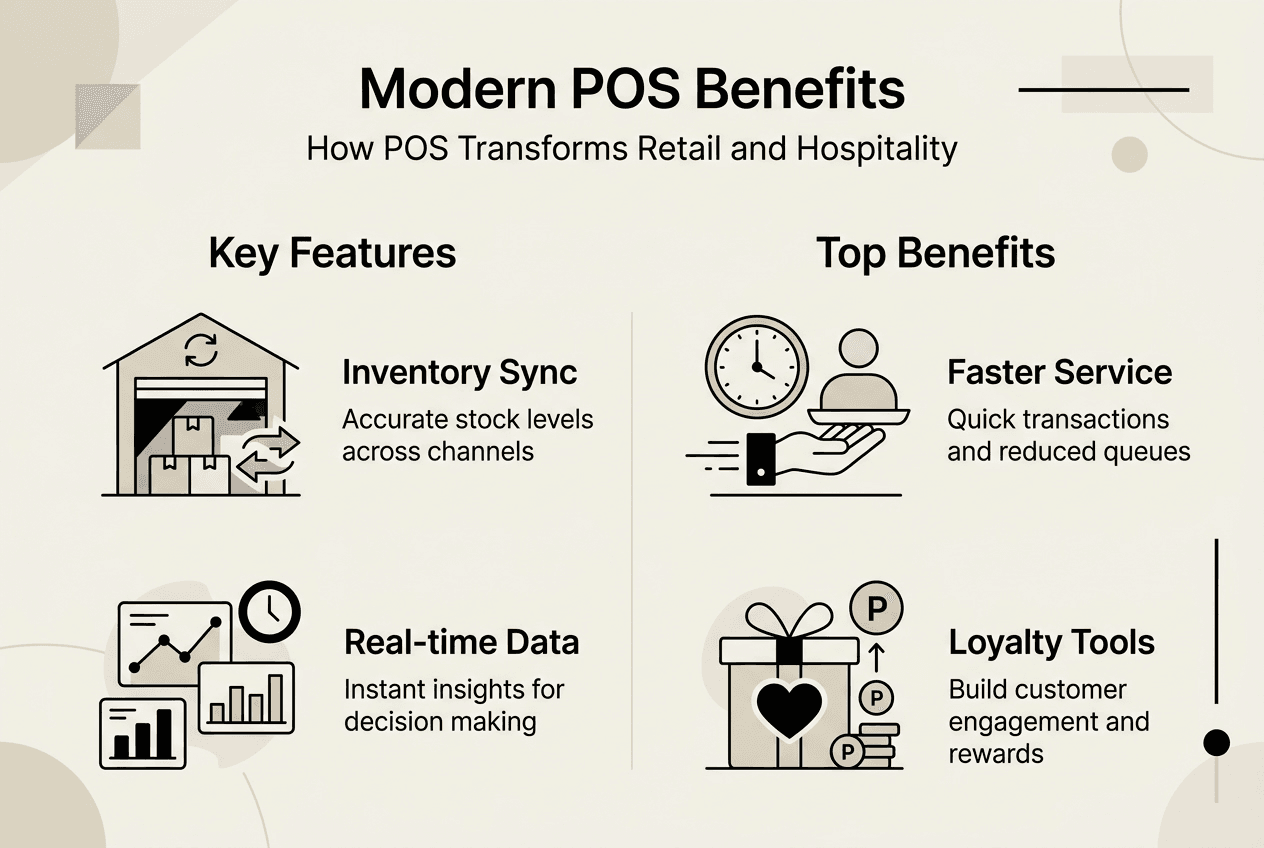
Inventory control sits at the heart of modern POS capabilities. Real-time stock tracking eliminates the guesswork that leads to overselling or emergency reorders. When a customer purchases an item, your inventory updates instantly across all sales channels. This synchronisation prevents embarrassing situations where you advertise products you don’t actually have. For restaurants, ingredient-level tracking ensures you know exactly when to reorder supplies before running out during peak service.
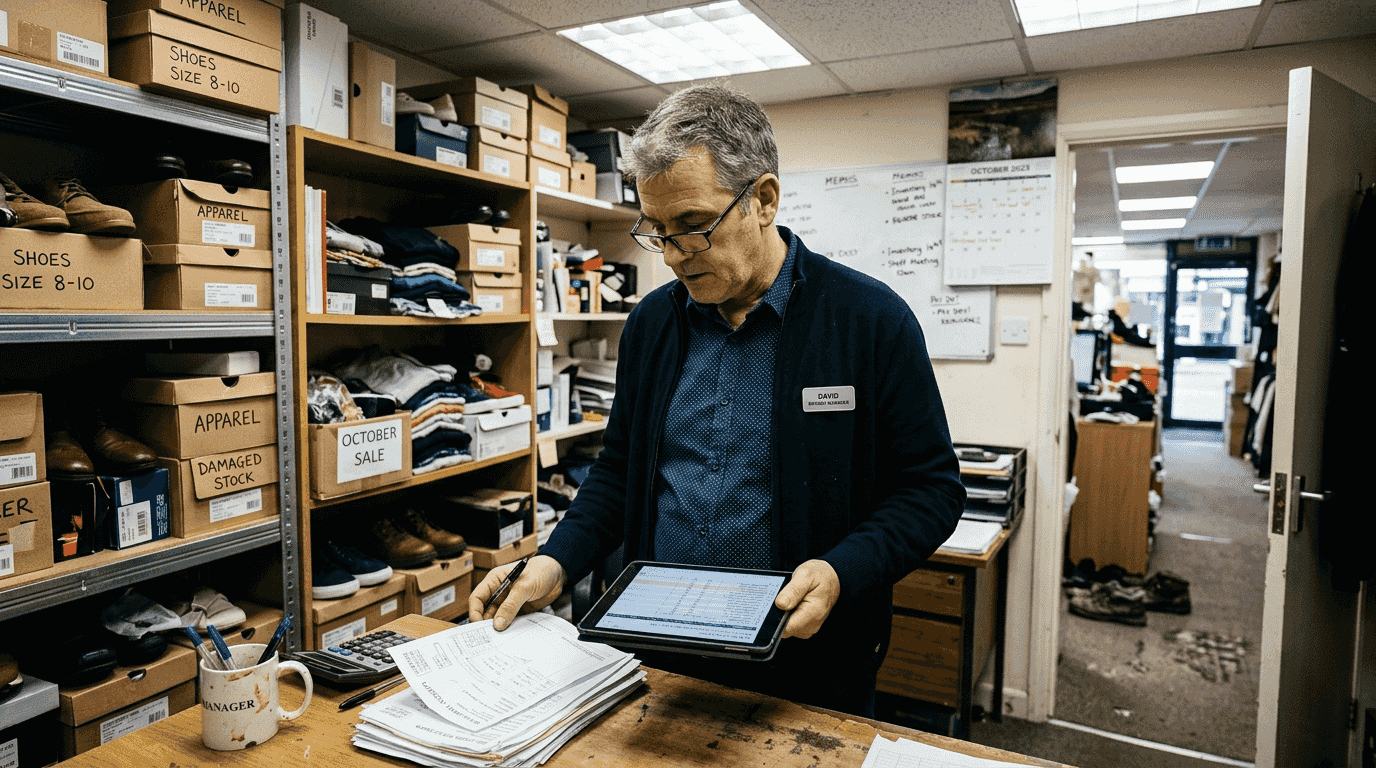
Customer relationship management transforms one-time buyers into loyal regulars. Modern systems capture purchase history, preferences, and contact details automatically. You can segment customers by spending patterns, send targeted promotions, and reward frequent visitors with personalised offers. A coffee shop might notice a customer always orders oat milk lattes and send them a discount when introducing a new oat milk-based drink. This level of personalisation was impossible with traditional cash registers.
Essential features such as inventory management and reporting provide operational intelligence that supports strategic decision-making rather than reactive management. Comprehensive reporting shows which products drive profit, which staff members perform best, and which hours generate peak revenue. You’re no longer guessing about business performance. You’re making data-informed choices about staffing, purchasing, and marketing.
| Feature | Business benefit | Implementation priority |
|---|---|---|
| Real-time inventory | Prevents stockouts and reduces waste | High |
| Customer profiles | Enables targeted marketing and loyalty programmes | Medium |
| Sales analytics | Identifies trends and optimises product mix | High |
| Employee management | Tracks performance and simplifies scheduling | Medium |
| Multi-channel integration | Unifies online and in-store operations | High for omnichannel businesses |
Predictive analytics take reporting further by forecasting future trends. Rather than simply showing last month’s sales, modern POS systems predict next month’s demand based on historical patterns, seasonality, and external factors. A retailer might learn that certain products sell better during specific weather conditions or local events. This foresight allows proactive ordering and staffing rather than constantly playing catch-up.
Pro tip: Prioritise POS features based on your specific pain points rather than choosing the system with the most capabilities. A takeaway needs robust kitchen display integration more than complex customer loyalty tools, whilst a boutique clothing shop benefits more from detailed customer profiles than table management features.
Integration capabilities extend your POS into a true business hub. Modern systems connect with accounting software, e-commerce platforms, delivery services, and marketing tools. This ecosystem approach means data flows automatically between systems, eliminating manual data entry and reducing errors. When your POS talks to your accounting software, VAT calculations and financial reporting become automatic rather than monthly headaches. Explore why use POS systems UK businesses increasingly demand these integrated approaches for operational efficiency.
Which modern POS system fits your business? tailoring for retail and hospitality
Not all POS systems serve the same purpose. Different POS types cater to various business needs, ensuring tailored solutions for retail and hospitality sectors with distinct operational requirements. Choosing incorrectly means paying for features you’ll never use whilst lacking capabilities you desperately need. Understanding the three main categories helps you match technology to your specific business model and growth plans.
Retail-specific POS systems excel at inventory management, barcode scanning, and customer loyalty programmes. These platforms assume you’re selling physical products that need tracking, pricing, and reordering. Features like size and colour variants, supplier management, and seasonal pricing make sense for clothing boutiques, convenience stores, and gift shops. The interface prioritises quick product lookup and efficient checkout processes during busy periods. Integration with e-commerce platforms allows unified inventory whether customers shop online or in-store.
Hospitality-focused POS systems address the unique challenges of restaurants, cafés, pubs, and takeaways. Table management, course timing, kitchen display systems, and split billing become essential rather than optional. These platforms understand that orders need routing to different preparation stations, modifications must be communicated clearly, and payment splitting happens frequently. Staff can take orders tableside on tablets, send them wirelessly to the kitchen, and process payments without customers queuing at a counter. For quick-service restaurants, speed and order accuracy take priority over detailed inventory tracking.
| POS type | Best for | Key features | Typical businesses |
|---|---|---|---|
| Retail | Product-based businesses | Barcode scanning, inventory variants, loyalty programmes | Shops, boutiques, convenience stores |
| Hospitality | Service-based venues | Table management, kitchen displays, course timing | Restaurants, cafés, pubs, takeaways |
| Multichannel | Omnichannel operations | Unified inventory, click-and-collect, marketplace integration | Retailers with online presence |
Multichannel POS systems unify online and offline sales into one platform. If you sell through your website, social media, marketplaces like Amazon, and physical locations, you need inventory synchronisation across all channels. These systems prevent overselling by updating stock levels everywhere simultaneously when a sale occurs anywhere. Click-and-collect functionality allows customers to order online and pick up in-store, combining the convenience of browsing at home with the immediacy of same-day collection. For growing businesses, this flexibility supports expansion without managing separate systems for each sales channel.
Hybrid needs exist too. A farm shop might need retail POS for packaged goods but also hospitality features for their café area. Many modern platforms offer modular approaches where you activate only the features relevant to your operations. This flexibility prevents paying for unnecessary complexity whilst ensuring you’re not limited as your business evolves. Discover types of POS systems retail hospitality options that accommodate mixed-use scenarios.
Pro tip: Test POS systems during your busiest operational periods, not during quiet demonstrations. A system that works perfectly in a demo might struggle when five staff members are processing transactions simultaneously during Saturday lunch rush or Boxing Day sales.
Consider future growth when selecting your POS type. A single-location café might not need multi-location features today, but if you plan to open a second site within two years, choosing a system that supports this expansion from the start avoids costly migrations later. Scalability matters as much as current functionality. The right POS grows with your business rather than requiring replacement every few years.
Overcoming challenges and maximising benefits when upgrading your POS
Transitioning to a new POS system requires significant financial investment and careful planning due to potential technical challenges that can disrupt operations if not managed properly. Many businesses underestimate the total cost of ownership, focusing only on hardware and software prices whilst overlooking training, data migration, and ongoing support expenses. Understanding these challenges upfront transforms a potentially stressful upgrade into a strategic improvement that delivers measurable returns.
Cost considerations extend beyond the initial purchase:
- Hardware costs including terminals, tablets, printers, scanners, and payment devices
- Software licensing fees, whether one-time purchases or monthly subscriptions
- Payment processing fees that vary significantly between providers
- Staff training time when team members learn the new system
- Data migration services to transfer existing customer and product information
- Ongoing support contracts for troubleshooting and updates
- Integration costs if connecting to existing accounting or e-commerce platforms
Compliance requirements cannot be ignored. Upgrading your till system protects your business from compliance risks and meets rising customer expectations around payment security and data protection. Businesses accepting card payments must meet PCI DSS standards, which mandate secure payment processing and regular security audits. In the UK, HMRC’s Making Tax Digital initiative requires digital record keeping for VAT-registered businesses. Modern POS systems handle these requirements automatically, but you must verify compliance before committing to a platform.
Technical migration challenges include transferring product catalogues, customer databases, and historical sales data from old systems to new platforms. Poor planning here leads to lost information or weeks of manual data entry. Most reputable POS providers offer migration services, but you’ll need to allocate time for data cleaning and verification. Expect a transition period where staff efficiency temporarily dips whilst everyone adapts to new workflows and interfaces.
Pro tip: Schedule your POS upgrade during your slowest trading period to minimise disruption. January for hospitality businesses or post-Christmas for retailers typically offers breathing room for training and troubleshooting without sacrificing peak revenue periods.
Maximising benefits requires strategic implementation:
- Involve staff early in the selection process to ensure the system suits actual workflows
- Invest properly in training rather than expecting team members to figure it out themselves
- Start with core features and gradually activate advanced capabilities as confidence grows
- Monitor key metrics before and after implementation to quantify improvements
- Establish regular review sessions to identify underutilised features and optimisation opportunities
Long-term thinking justifies short-term costs. Yes, modern POS systems require investment, but the efficiency gains compound over time. Faster checkouts mean serving more customers per hour. Better inventory control reduces waste and stockouts. Improved customer data enables targeted marketing that drives repeat visits. These benefits accumulate month after month, eventually far exceeding the initial upgrade costs. Learn more about why upgrade your POS system and the strategic advantages that justify investment.
Customer satisfaction improvements often provide the most compelling return on investment. Contactless payments, digital receipts, loyalty programme integration, and faster service all contribute to better experiences that drive positive reviews and word-of-mouth referrals. In competitive markets, these experience advantages differentiate your business from competitors still using outdated systems. The question isn’t whether you can afford to upgrade, but whether you can afford not to.
Explore tailored POS solutions for your business
Choosing the right POS system transforms how you operate, but finding the perfect match for your specific retail or hospitality business requires expert guidance and quality hardware. Whether you’re launching a new café, expanding your retail chain, or finally replacing that temperamental old till, the right partner makes all the difference. YCR Distribution specialises in providing comprehensive POS solutions tailored to UK businesses like yours, combining three decades of industry experience with cutting-edge technology.
Explore flexible POS software options including SAMTOUCH and EZEEPOS, designed specifically for hospitality and retail operations. Pair your software with reliable POS hardware from trusted brands like SAM4S and iMin, ensuring your system performs flawlessly during peak trading periods. From terminals and tablets to scanners and printers, YCR offers complete solutions with next-day delivery and same-day dispatch options. Discover why use POS systems UK businesses trust YCR Distribution for implementation support, credit accounts, and ongoing technical assistance that keeps your operations running smoothly.
Frequently asked questions
What is a modern POS system?
A modern POS system is a cloud-based platform that integrates sales processing, inventory management, customer relationship tools, payment processing, and business analytics into one unified solution. Unlike traditional cash registers that simply record transactions, modern systems provide real-time operational intelligence and connect seamlessly with other business software. They typically run on tablets or touchscreen terminals with internet connectivity, enabling remote access and automatic updates.
How can modern POS improve my restaurant’s efficiency?
Modern POS systems streamline order management by sending requests directly to kitchen displays, eliminating handwritten tickets and reducing errors. Table management features track occupancy, course timing, and bill splitting automatically, speeding up service during busy periods. Real-time inventory tracking prevents running out of key ingredients mid-service, whilst integrated payment processing reduces checkout time. Comprehensive reporting identifies your most profitable menu items and peak service times, enabling smarter staffing and purchasing decisions.
Are cloud-based POS systems secure and compliant?
Modern cloud POS platforms use bank-level encryption and comply with PCI DSS standards to protect payment data and customer information. They support HMRC’s Making Tax Digital requirements by maintaining accurate digital records and generating compliant VAT reports automatically. Businesses accepting card payments must meet PCI DSS and digital VAT record rules to ensure compliance and avoid penalties. Reputable providers conduct regular security audits and apply updates automatically, often providing better protection than on-premise systems that rely on manual maintenance.
What are the main types of POS systems for retail businesses?
Retail businesses typically choose between retail-specific systems optimised for inventory management and barcode scanning, hospitality-specialised platforms designed for table service and kitchen operations, or multichannel systems that unify online and offline sales. Retail-specific POS excels at product variants, supplier management, and loyalty programmes. Multichannel solutions synchronise inventory across websites, marketplaces, and physical locations, preventing overselling and enabling click-and-collect services. Choosing the right type depends on your sales channels, product complexity, and growth plans rather than simply selecting the most feature-rich option.