
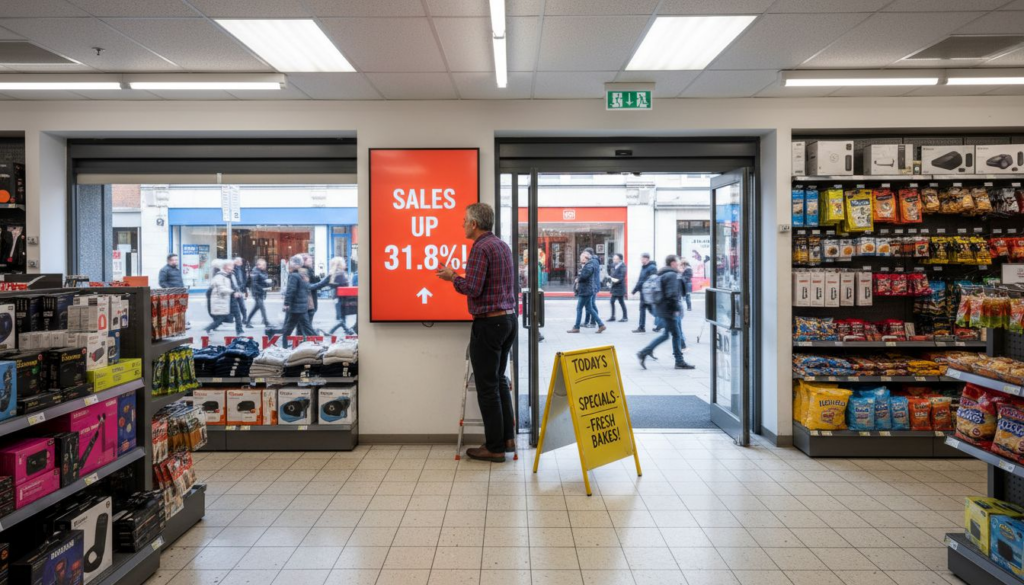
UK retailers using digital signage in UK retail achieve an average 31.8% sales increase compared to traditional static displays. This technology transforms customer engagement and operational efficiency for retail and hospitality businesses across Britain. You’ll discover measurable benefits, practical integration strategies, and real UK case studies demonstrating how digital signage solves common challenges facing modern businesses.
Table of Contents
- Introduction To Digital Signage In Retail And Hospitality
- How Digital Signage Enhances Customer Engagement
- Operational Benefits Of Digital Signage For UK Businesses
- Common Misconceptions About Digital Signage
- Comparing Digital Signage With Traditional Static Signage
- Integrating Digital Signage With POS And Business Systems
- Case Studies And Practical Implementation Tips For UK Businesses
- Conclusion: Making The Most Of Digital Signage In Retail And Hospitality
- Explore Digital Signage And POS Solutions From YCR
- Frequently Asked Questions
Key Takeaways
| Point | Details |
|---|---|
| Sales Impact | Digital signage delivers a 31.8% average sales boost for UK retail businesses through dynamic, targeted content. |
| Customer Engagement | Dwell time increases by over 30% when customers interact with digital displays versus static signage. |
| Operational Efficiency | Real-time menu boards and POS integration reduce order errors and perceived wait times significantly. |
| Cost Effectiveness | UK businesses typically achieve ROI within 12 to 18 months despite initial investment concerns. |
| System Integration | Modern digital signage connects seamlessly with POS systems to personalize offers and streamline inventory management. |
Introduction to Digital Signage in Retail and Hospitality
Digital signage refers to electronic display systems that communicate dynamic content through screens, replacing traditional printed materials with flexible, updatable digital media. These systems range from simple menu boards to sophisticated networks managing multiple displays across locations.
UK retail and hospitality businesses face mounting challenges that digital signage directly addresses:
- Capturing customer attention in crowded, distraction-filled environments
- Overcoming static signage limitations that can’t adapt to changing promotions or inventory
- Managing operational inefficiencies from manual menu updates and communication gaps
- Competing with online retailers through enhanced in-store experiences
Digital signage adoption is growing steadily across UK retail and hospitality as businesses recognize its competitive advantages. Market drivers include falling hardware costs, improved software platforms, and proven ROI data from early adopters. The technology delivers unmatched flexibility for targeted messaging, adapts instantly to business needs, and supports operational requirements from queue management to staff communications.
Pro Tip: Start with a single high-traffic location to test digital signage impact before expanding across multiple sites. This approach minimizes risk while generating proof of concept data.
Modern systems integrate with existing business infrastructure, particularly digital signage role in UK retail operations, creating unified communication platforms that enhance both customer and staff experiences.
How Digital Signage Enhances Customer Engagement
Dynamic visuals capture attention far more effectively than static posters. Movement, color changes, and rotating content trigger psychological responses that draw eyes and hold focus. This fundamental advantage translates directly into measurable business outcomes.
Digital signage increases customer dwell time by over 30%, leading to higher engagement and sales. Longer dwell time means customers browse more products, consider additional purchases, and absorb promotional messaging more thoroughly. The 31.8% average sales increase stems directly from this extended engagement window.
Targeted messaging capabilities transform generic advertising into personalized communication. Digital systems adjust content based on:
- Time of day (breakfast menus versus dinner specials)
- Weather conditions (promoting cold drinks during heatwaves)
- Inventory levels (highlighting overstocked items)
- Customer demographics detected through integration with loyalty programs
Relevant messaging resonates stronger than broad appeals. A café promoting iced coffees at 2pm on a warm afternoon generates more sales than generic beverage advertising. This precision targeting, enabled by customer engagement benefits of digital signage, maximizes every impression.
Key Stat: Retailers report that digital signage influences 31.8% more purchase decisions compared to static alternatives, according to retail technology review findings.
The psychological impact matters too. Static signage becomes invisible through habituation. Our brains filter out unchanging stimuli. Digital content refreshes regularly, defeating this filtering mechanism and maintaining attention across repeat customer visits.
Operational Benefits of Digital Signage for UK Businesses
Beyond customer engagement, digital signage revolutionizes daily operations. Digital signage reduces perceived wait times and order errors, improving operational efficiency through several mechanisms that directly impact your bottom line.
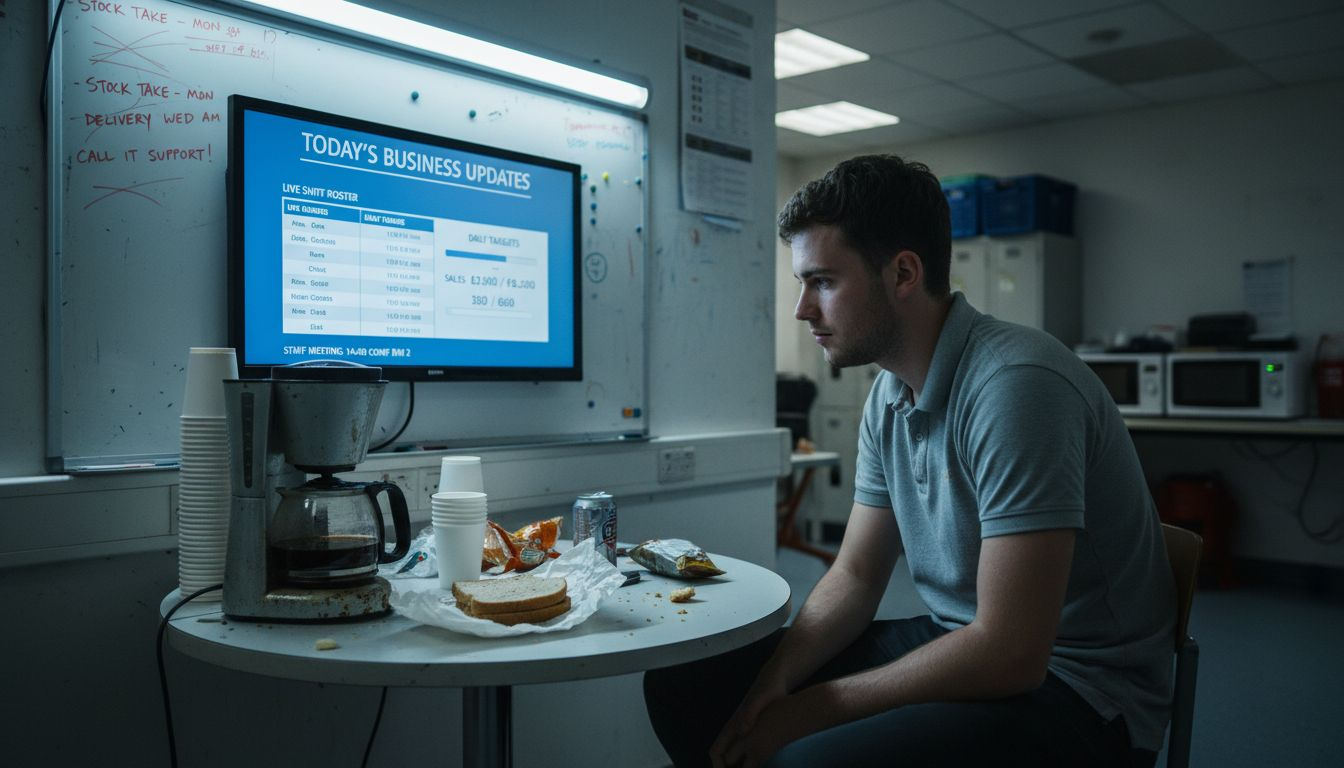
Real-time queue information and entertaining content make waiting feel shorter. Customers who know their position in line experience less frustration. Display engaging content during waits, and customers report higher satisfaction scores even when actual wait times remain unchanged.
Order accuracy improves dramatically with digital menu boards connected to POS systems. When your kitchen receives orders directly from digital displays showing current offerings, impossible orders vanish. Menu changes propagate instantly across all customer-facing screens and backend systems. This integration, discussed further in operational improvements with POS integration, eliminates the lag between printed menu updates and kitchen capabilities.
Cost savings accumulate through:
- Eliminated printing expenses for menu changes, promotional materials, and directional signage
- Reduced waste from outdated printed materials discarded after promotions end
- Lower labor costs from automated content scheduling versus manual poster changes
- Decreased inventory carrying costs through dynamic pricing that moves stock faster
Staff communication improves when digital displays share shift information, preparation priorities, and real-time business metrics. Floor teams stay coordinated without constant manager interruptions. Kitchen staff see upcoming orders and preparation requirements, enabling proactive workflow management as explained in POS role in hospitality efficiency.
Pro Tip: Schedule content updates during off-peak hours to test changes before busy periods. This practice catches errors when stakes are low and allows time for corrections.
The operational benefits compound over time. Initial efficiency gains enable staff reallocation to higher-value tasks. Better communication reduces stress and turnover. Accurate information prevents costly mistakes that damage customer relationships and waste inventory.
Common Misconceptions about Digital Signage
Three persistent myths prevent UK businesses from adopting digital signage despite clear benefits. Let’s correct these misconceptions with data.
-
Myth: Digital signage costs too much for small businesses. Reality shows ROI for digital signage in small UK businesses is typically realized within 12 to 18 months through increased sales and operational savings. Entry-level systems start affordably, and financing options spread costs across the payback period. The 31.8% sales increase rapidly offsets initial investment.
-
Myth: Managing digital signage requires specialized technical expertise. Modern cloud-based platforms offer intuitive interfaces requiring minimal training. Most UK business owners update content themselves after brief onboarding. Template libraries, drag-and-drop editors, and automated scheduling eliminate technical barriers. Survey data shows 78% of small business owners find systems easier to manage than anticipated.
-
Myth: Static signage works just as well and costs less. Engagement and sales data definitively disprove this assumption. Static displays suffer from habituation, can’t target messages, and require replacement costs that accumulate over time. Digital signage’s ability to test multiple messages, adjust to conditions, and update instantly delivers superior performance across all metrics as demonstrated in digital signage ROI and misconceptions.
These misconceptions often stem from outdated information or limited exposure to modern systems. Early digital signage required expensive proprietary hardware and complex content management. Today’s solutions leverage affordable displays, cloud platforms, and mobile-friendly interfaces that democratize access.
Addressing these myths directly during your evaluation process helps secure stakeholder buy-in. Present ROI calculations, arrange vendor demonstrations showing management simplicity, and review comparative performance data. Evidence-based decision making overcomes skepticism effectively.
Comparing Digital Signage with Traditional Static Signage
Direct comparison clarifies the strategic choice between digital and static signage approaches:
| Factor | Digital Signage | Static Signage |
|---|---|---|
| Content Updates | Instant remote updates across all locations | Manual replacement requiring design, printing, shipping, installation |
| Initial Investment | Higher upfront cost for displays and software | Lower initial cost for design and printing |
| Lifetime Cost | Lower through eliminated printing and labor | Higher from repeated printing and installation |
| Customer Engagement | 30%+ dwell time increase, 31.8% sales boost | Baseline engagement declining through habituation |
| Message Targeting | Dynamic content adapts to time, weather, inventory | Fixed message regardless of conditions |
| ROI Timeline | 12-18 months typical payback period | Ongoing cost without measurable return |
| System Integration | Connects with POS, inventory, analytics platforms | No integration capability |
| Flexibility | Test multiple messages, adjust instantly | Committed to printed message until replacement |
The comparison reveals digital signage’s strategic advantages despite higher initial costs. Speed matters in competitive markets. Responding instantly to competitor pricing, inventory changes, or promotional opportunities creates revenue that static signage can’t capture.
Integration capabilities amplify benefits beyond basic messaging. When your signage system communicates with business systems, you gain closed-loop marketing. Track which promotions drive sales, adjust messaging based on performance, and optimize continuously. Static signage offers no feedback mechanism for improvement.
Consider total cost of ownership over three to five years rather than focusing solely on initial investment. Digital signage’s operational savings and revenue increases typically deliver lower lifetime costs alongside superior performance.
Integrating Digital Signage with POS and Business Systems
Maximum value emerges when digital signage integrates with your POS system, creating intelligent displays that respond to real business conditions. Integration of digital signage with POS can increase transaction values through personalized messaging that suggests complementary items based on current orders.
Integration benefits include:
- Dynamic pricing that adjusts automatically based on inventory levels, time of day, or competitive factors
- Automated promotion triggering when specific conditions occur, like slow-moving stock or weather changes
- Personalized upselling when loyalty program data informs which offers resonate with current customers
- Real-time menu availability showing only items currently in stock
Use cases demonstrate practical applications. A restaurant’s digital menu board highlights appetizers when the kitchen has capacity, then shifts focus to quick-turn items during peak periods. POS data triggers these changes automatically without staff intervention. A retail store’s displays promote complementary products based on items currently in customer baskets, increasing basket size through timely suggestions.
Operational streamlining extends beyond marketing. Inventory updates from your POS flow automatically to digital signage, preventing customer disappointment from ordering unavailable items. Order accuracy improves when digital displays and kitchen systems share the same real-time menu data, eliminating version control issues inherent in printed materials.
Implementing effective integration requires several steps:
- Evaluate current POS capabilities and integration options when choosing POS for integration
- Select digital signage platforms with proven integrations for your specific POS system
- Map data flows identifying which business information should trigger content changes
- Test integration thoroughly during off-peak periods before full deployment
- Train staff on monitoring integration health and troubleshooting common issues
Pro Tip: Start with simple integrations like inventory availability before implementing complex personalization. Build confidence and demonstrate value through quick wins.
The strategic importance of POS integration grows as customer expectations for personalized experiences increase. Understanding why POS software matters UK business contexts helps evaluate integration priorities and maximize return from combined systems.
Case Studies and Practical Implementation Tips for UK Businesses
Real UK implementations demonstrate digital signage impact across retail and hospitality sectors. A Manchester-based café chain with twelve locations installed integrated digital menu boards connected to their POS system in early 2025. Within six months, they documented 25% reduction in order errors and 20% increase in add-on item sales through automated upselling prompts. Customer satisfaction scores improved 15% despite unchanged wait times, attributed to engaging content and accurate wait information.
Successful implementation follows a structured sequence:
- Assess current pain points and prioritize which challenges digital signage should address first
- Define success metrics including sales targets, efficiency improvements, and customer satisfaction goals
- Select appropriate hardware and software through vendor demonstrations and reference checks
- Plan content strategy covering message rotation, update frequency, and responsibility assignment
- Install systems with minimal business disruption, typically during closed hours
- Train staff on basic operations, content updates, and troubleshooting procedures
- Monitor KPIs weekly during the first three months, adjusting strategy based on performance data
Common challenges include content management neglect and integration oversights. Many businesses invest in excellent hardware but fail to maintain fresh, relevant content. Stale digital signage performs only marginally better than static alternatives. Establish clear content ownership and update schedules during initial planning.
Integration complexity surprises businesses expecting plug-and-play simplicity. Budget time and resources for proper system integration, testing, and staff training. Rushing integration leads to underutilized capabilities and disappointing results.
Small UK businesses with limited resources should consider starting with digital signage solutions for UK businesses designed specifically for independent operators. Cloud-based platforms minimize IT requirements while delivering enterprise capabilities. Managed services options transfer technical responsibilities to specialists, allowing you to focus on content strategy and business outcomes.
Regional considerations matter for UK implementations. Account for British power standards, ensure outdoor displays handle local weather conditions, and verify vendors provide UK-based support during your business hours. These practical details prevent deployment delays and operational headaches.
Conclusion: Making the Most of Digital Signage in Retail and Hospitality
Digital signage delivers quantifiable benefits for UK retail and hospitality businesses through enhanced customer engagement and operational efficiency. The 31.8% average sales increase and 30%+ dwell time improvements translate directly to revenue growth, while operational benefits reduce costs and improve accuracy.
Cost concerns and complexity myths shouldn’t deter adoption. ROI timelines of 12 to 18 months demonstrate financial viability for small businesses, and modern cloud platforms require minimal technical expertise. Integration with POS systems amplifies benefits through personalized messaging and streamlined operations.
UK businesses ready to compete effectively in 2026’s demanding retail environment should evaluate digital signage as a strategic investment rather than optional technology. Start with focused pilots proving value, then expand based on measured results. The combination of customer engagement improvements and operational efficiencies creates competitive advantages that static signage simply cannot match.
Explore Digital Signage and POS Solutions from YCR
YCR Distribution combines over thirty years of experience with comprehensive trade digital signage solutions designed specifically for UK retail and hospitality businesses. Our integrated approach connects digital signage with proven POS hardware to maximize operational efficiency and customer engagement.
Whether you operate a café, restaurant, retail store, or hospitality venue, YCR provides tailored solutions matching your specific requirements. Our hospitality POS hardware and retail POS systems integrate seamlessly with digital signage platforms, creating unified communication and transaction systems. Contact our team for expert consultation on implementing digital signage that delivers measurable results for your business.
Frequently Asked Questions
What types of digital signage are best for small UK retail businesses?
Freestanding digital posters and simple menu boards offer excellent starting points for small retailers and hospitality venues. These systems provide immediate impact without complex installation requirements. Choose solutions offering POS integration capabilities even if you don’t implement integration immediately, preserving future upgrade options that maximize long-term value.
How quickly can UK businesses expect ROI from digital signage?
ROI typically occurs within 12-18 months for small UK business digital signage deployments when businesses maintain active content management and leverage integration capabilities. Faster payback happens when digital signage addresses specific high-impact pain points like order accuracy or promotional effectiveness. Calculate expected ROI using conservative sales increase estimates and documented operational savings to set realistic expectations.
Can digital signage integrate with existing UK POS systems?
Most modern digital signage platforms support integration with popular UK POS systems including EPOS Now, Lightspeed, and other major providers. Integration enables real-time inventory updates, automated promotional triggering, and personalized customer messaging based on transaction data. Verify integration capabilities during vendor selection, requesting demonstrations using your specific POS system to confirm compatibility and ease of implementation.
What common challenges should UK businesses prepare for when adopting digital signage?
Content management represents the most frequent challenge as businesses underestimate effort required for keeping displays fresh and relevant. Establish clear content ownership, update schedules, and approval processes before deployment. Choose digital signage solutions offering robust POS integration to automate content updates based on business conditions, reducing manual management burden. Set realistic ROI expectations of 12 to 18 months rather than expecting immediate returns, allowing time for optimization and customer behavior adaptation.